 ChipApex | Global Electronic Components Supplier

SEARCH
Search Product
Search Post
— IC芯片 | 连接器 | 传感器 | 被动器件 —
Search productSearch post
— IC芯片 | 连接器 | 传感器 | 被动器件 —
Consult the customer manager about the wholesale price.
consultation hotline:86-132-6715-2157
email:[email protected]
Contact the product manager for consultation. One-stop consultation is available.
Do you want a lower wholesale price? Please send us your inquiry and we will reply immediately.
The EFR32ZG14P231F256GM32-BR is a Z-Wave 700 Modem System-on-Chip (SoC) manufactured by Silicon Labs. It integrates an ARM Cortex-M4 core operating at up to 39 MHz with 256 kB of program memory and 32 kB of RAM. The device features a Sub-GHz radio supporting frequencies of 868 MHz and 915 MHz, delivering a maximum output power of 14 dBm and a receiver sensitivity of -98.8 dBm. It operates within a voltage range of 1.8 V to 3.8 V, with receiving current at 10.2 mA and transmitting current at 43.8 mA. The component is housed in a QFN-32 package and supports a data rate of 100 kbps across an operating temperature range of -40°C to +85°C.
Verify the specific suffix 'BR' indicates reel packaging when sourcing components. Confirm that the part number corresponds to the Z-Wave 700 modem variant rather than other EFR32 series options. Ensure compatibility with required frequency bands for your target region before procurement. Cross-reference the manufacturer's latest documentation to confirm active status and lifecycle information.
Select this SoC for designs requiring integrated Z-Wave protocol handling without external baseband chips. The high output power and sensitivity support robust mesh networking in residential environments. Consider the QFN-32 footprint for compact PCB layouts. Evaluate the 39 MHz CPU speed against application processing requirements to ensure sufficient headroom for complex logic tasks.
This component belongs to the EFR32ZG14 family, which is specifically engineered for Z-Wave 700 compliance. Unlike general-purpose ISM transceivers, this SoC includes dedicated hardware acceleration for Z-Wave security and protocol management. It simplifies development by combining the radio, MCU, and necessary peripherals into a single package, reducing bill of materials complexity for certified smart home products.
Direct replacements include other variants within the EFR32ZG14 family, such as the EFR32ZG14P231F256GM32, provided pinout and package compatibility are verified. Check datasheets for differences in flash size or GPIO count if upgrading from lower-tier models. Ensure any substitute maintains Z-Wave 700 certification requirements.
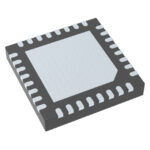 EFR32ZG14P231F256GM32-BR

The activity of extra discounts on wholesale prices is in full swing…
Please fill in your contact information and we will send you the latest wholesale price list.






