 ChipApex | Global Electronic Components Supplier
SEARCH
Search Product
Search Post
— IC芯片 | 连接器 | 传感器 | 被动器件 —
Search productSearch post
— IC芯片 | 连接器 | 传感器 | 被动器件 —
Consult the customer manager about the wholesale price.
consultation hotline:86-132-6715-2157
email:[email protected]
Contact the product manager for consultation. One-stop consultation is available.
Do you want a lower wholesale price? Please send us your inquiry and we will reply immediately.
The EL3012S1(TA)-V is a single-element Triac output optocoupler manufactured by Everlight Electronics. It features a GaAs infrared emitting diode optically coupled to a monolithic silicon random phase photo Triac. The device provides high isolation voltage of 5000 V rms between input and output. It is designed for interfacing electronic controls with power triacs to manage resistive and inductive loads in 115 to 240 VAC operations. The component operates within a temperature range of -55 °C to 100 °C, has a maximum forward current of 0.06 A, and a peak breakdown voltage of 400 V.
Verify the specific suffix (TA) corresponds to the required surface mount package configuration and tape-and-reel quantity. Confirm that the 400 V peak breakdown voltage meets the system's transient requirements. Ensure compatibility with the target operating temperature range of -55 °C to 100 °C. Cross-reference safety approval numbers such as UL E214129 and VDE 132249 against regional regulatory mandates before finalizing procurement.
Select this component when random phase triggering is acceptable for the load type, distinguishing it from zero-cross variants like the EL304X series. The 400 V peak breakdown voltage suits standard residential and commercial AC line voltages. Consider the 6-pin surface mount package constraints for PCB layout. Verify that the input trigger current specifications align with the driving microcontroller or logic gate capabilities.
This part belongs to the EL301X series of random phase Triac driver photocouplers. It shares the same internal architecture as through-hole versions but utilizes a surface mount package. The series is engineered for general-purpose AC power switching applications where precise zero-crossing timing is not critical. It serves as an interface between low-voltage digital logic and higher-voltage AC power stages.
Direct replacements include other EL301X series parts with matching pinouts and electrical ratings. Verify that substitute components maintain the 5000 Vrms isolation rating and 400 V peak breakdown voltage. Ensure any alternative maintains the random phase characteristic rather than zero-cross functionality.
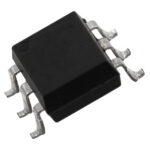 EL3012S1(TA)-V
The activity of extra discounts on wholesale prices is in full swing…
Please fill in your contact information and we will send you the latest wholesale price list.






