 ChipApex | Global Electronic Components Supplier
SEARCH
Search Product
Search Post
— IC芯片 | 连接器 | 传感器 | 被动器件 —
Search productSearch post
— IC芯片 | 连接器 | 传感器 | 被动器件 —
Consult the customer manager about the wholesale price.
consultation hotline:86-132-6715-2157
email:[email protected]
Contact the product manager for consultation. One-stop consultation is available.
Do you want a lower wholesale price? Please send us your inquiry and we will reply immediately.
The EL3051S(TB) is a high-speed phototransistor optocoupler featuring an infrared LED coupled to a silicon phototransistor. It provides electrical isolation between input and output circuits with a high common-mode transient immunity. The device is housed in a standard DIP-6 package, suitable for surface mount or through-hole applications. Key electrical characteristics include a collector-emitter voltage of 70V and a collector current of 100mA. The unit offers a typical current transfer ratio of 200% at IF=10mA, ensuring efficient signal transmission across the isolation barrier while maintaining low power consumption.
Verify the specific suffix 'TB' indicates tape-and-reel packaging when ordering bulk quantities. Confirm that the base model EL3051S matches the required pinout and electrical specifications for your circuit design. Ensure compliance with RoHS directives if applicable to your manufacturing region. Cross-reference the datasheet revision date to guarantee parameter accuracy against your system requirements before finalizing procurement.
Choose this component when high-speed signal isolation is critical compared to standard optocouplers. Evaluate the required current transfer ratio against your load conditions to ensure adequate drive capability. Consider the operating temperature range and isolation voltage ratings relative to your application's safety standards. Verify compatibility with your PCB footprint and assembly process given the DIP-6 package constraints.
This part belongs to Everlight's family of general-purpose optocouplers designed for reliable signal transmission. It serves as a bridge between low-voltage control logic and higher-voltage power stages. The series is widely used in consumer electronics and industrial machinery where galvanic isolation prevents ground loops and protects sensitive components from voltage spikes.
Direct replacements may include other high-speed phototransistor optocouplers with similar DIP-6 packages and comparable CTR values. Verify pin compatibility and isolation voltage ratings before substitution. Check manufacturer cross-reference lists for equivalent parts with identical functional specifications.
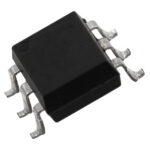 EL3051S(TB)
The activity of extra discounts on wholesale prices is in full swing…
Please fill in your contact information and we will send you the latest wholesale price list.






