ChipApex | Global Electronic Components Supplier
SEARCH
Search Product
Search Post
— IC芯片 | 连接器 | 传感器 | 被动器件 —
Search productSearch post
— IC芯片 | 连接器 | 传感器 | 被动器件 —
Consult the customer manager about the wholesale price.
consultation hotline:86-132-6715-2157
email:[email protected]
Contact the product manager for consultation. One-stop consultation is available.
Do you want a lower wholesale price? Please send us your inquiry and we will reply immediately.
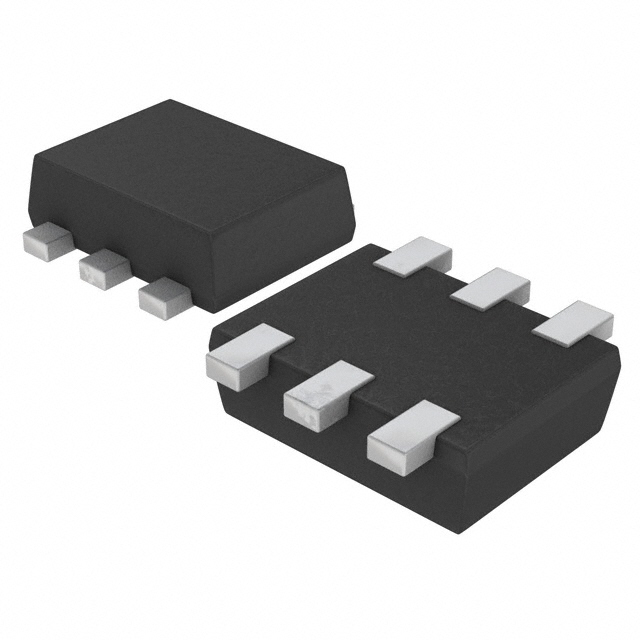
The EMD52T2R is a dual digital transistor manufactured by ROHM Semiconductor, featuring two PNP transistors integrated with bias resistors within a compact SOT-563 (EMT6) surface-mount package. This Bias Resistor Built-in Transistor (BRBT) design simplifies circuit layouts by reducing component count and board space. Key electrical specifications include a maximum collector-emitter voltage of -150 mV, a continuous collector current of -100 mA, and a power dissipation rating of 150 mW. The device offers a typical input resistance of 47 kOhms with a resistor ratio of 1, ensuring stable switching performance. It supports a maximum operating frequency of 250 MHz and functions reliably at temperatures up to +150 C.
Verify the specific suffix 'T2R' confirms the reel packaging format when ordering. Confirm RoHS compliance status through official datasheets or manufacturer declarations prior to integration. Ensure the procurement channel provides authentic ROHM Semiconductor products to avoid counterfeit components that may lack specified electrical characteristics.
Select the EMD52T2R when a dual PNP configuration with integrated biasing is required. Compare input resistance values against other models if different base drive currents are needed. Verify that the -150 mV collector-emitter voltage rating meets the system's supply requirements. Consider the SOT-563 package dimensions for PCB layout constraints compared to single-transistor alternatives.
The EMD52T2R belongs to ROHM's series of dual digital transistors designed for space-saving applications. It shares the SOT-563 package form factor with other variants like the EMH52T2R (NPN+NPN) and EMD62T2R (NPN+PNP). This family allows designers to replace multiple discrete components with a single surface-mount device, enhancing reliability and reducing assembly complexity.
The EMH52T2R serves as a functional equivalent but utilizes NPN polarity instead of PNP. Designers must invert logic levels and adjust biasing networks accordingly when substituting. Verify pin compatibility and thermal ratings before implementation.
 EMD52T2R
The activity of extra discounts on wholesale prices is in full swing…
Please fill in your contact information and we will send you the latest wholesale price list.