ChipApex | Global Electronic Components Supplier

SEARCH
Search Product
Search Post
— IC芯片 | 连接器 | 传感器 | 被动器件 —
Search productSearch post
— IC芯片 | 连接器 | 传感器 | 被动器件 —
Consult the customer manager about the wholesale price.
consultation hotline:86-132-6715-2157
email:[email protected]
Contact the product manager for consultation. One-stop consultation is available.
Do you want a lower wholesale price? Please send us your inquiry and we will reply immediately.
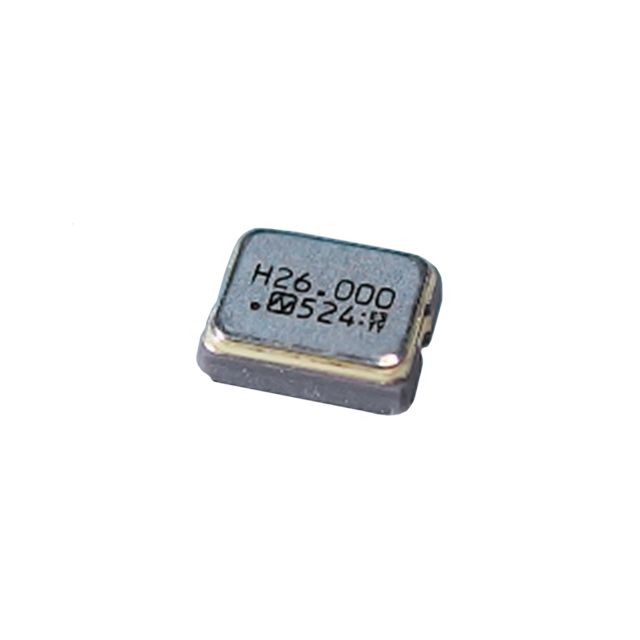
The NDK END5301A-60M is a standard CMOS crystal oscillator operating at 60.0000 MHz. It functions within a supply voltage range of 1.8V to 3.3V and draws a maximum current of 9mA. The device features ±100ppm frequency stability and supports standby mode for power reduction. It operates reliably between -40°C and +125°C, meeting AEC-Q100 and AEC-Q200 automotive standards. The component utilizes a 4-SMD, no-lead package with dimensions of 2.50mm x 2.00mm x 0.90mm.
Verify the specific ordering suffix against the manufacturer's official documentation to ensure correct packaging and tape-and-reel specifications. Confirm that the requested variant matches the required frequency tolerance and voltage range for your design. Cross-reference the part number with authorized distributors to avoid counterfeit components. Ensure compliance with RoHS directives and REACH regulations as specified in the product datasheet before finalizing procurement orders.
Select this component when a 60 MHz CMOS clock source is required for automotive or industrial environments. The wide operating temperature range and automotive qualification make it suitable for harsh conditions. Consider the small SMD footprint for space-constrained PCB layouts. Verify that the 1.8V to 3.3V supply range aligns with the system's power architecture and that the 9mA current consumption fits within the available power budget.
This oscillator belongs to the NZ2520SHA series from NDK, designed for compact surface-mount applications. The series offers various frequencies while maintaining consistent physical dimensions and electrical characteristics. It serves as a critical timing element in modern electronic designs where size, reliability, and performance are paramount. The standardized package facilitates automated assembly and integration into diverse circuit boards.
Compatible substitutes include other 60 MHz CMOS oscillators from NDK such as the END5301A-50M for different frequency requirements. Alternative manufacturers may offer equivalent parts, but pin compatibility and electrical parameters must be verified. Ensure any replacement meets the same AEC-Q100/AEC-Q200 standards if used in automotive contexts.
 END5301A-60M

The activity of extra discounts on wholesale prices is in full swing…
Please fill in your contact information and we will send you the latest wholesale price list.