 ChipApex | Global Electronic Components Supplier
SEARCH
Search Product
Search Post
— IC芯片 | 连接器 | 传感器 | 被动器件 —
Search productSearch post
— IC芯片 | 连接器 | 传感器 | 被动器件 —
Consult the customer manager about the wholesale price.
consultation hotline:86-132-6715-2157
email:[email protected]
Contact the product manager for consultation. One-stop consultation is available.
Do you want a lower wholesale price? Please send us your inquiry and we will reply immediately.
The EP20K100QC240-2 is a high-density programmable logic device from the Altera APEX 20K family, utilizing the MultiCore architecture. It integrates look-up table (LUT) logic for register-intensive functions with product-term-based logic and embedded system blocks (ESB) for memory applications like FIFOs and dual-port RAM. The device features 4,160 logic elements, up to 53,248 maximum RAM bits, and 416 macrocells. Designed for low-power operation, it supports internal supply voltages of 2.5 V or 1.8 V and offers flexible I/O standards via its MultiVolt interface. It includes advanced clock management with four phase-locked loops and is housed in a 240-pin plastic quad flat pack package.
Verify the specific speed grade associated with the '-2' suffix against official datasheets, as performance characteristics vary by grade. Confirm that the design environment utilizes the Altera Quartus II development system, which provides native support for the APEX 20K family compilation and simulation.
Select this component when designs require a mix of complex combinational logic and substantial embedded memory resources. The 240-pin PQFP package is suitable for applications where board space allows for larger footprints but requires robust thermal dissipation. Ensure voltage requirements align with the 2.5V or 1.8V internal supply options.
The EP20K100QC240-2 belongs to the APEX 20K series, representing Altera's first PLD family with SOPC integration capabilities. This series bridges the gap between traditional CPLDs and FPGAs by offering both LUT and product-term architectures. It is distinct from the later MAX series and Cyclone families, serving primarily in high-performance legacy systems requiring reconfigurable logic.
Direct pin-to-pin replacements are not explicitly listed in the provided documentation. Designers may consider other devices within the APEX 20K family, such as the EP20K100E variants, though feature sets differ. Migration to newer Intel/Altera FPGA families typically requires significant architectural redesign and software toolchain updates.
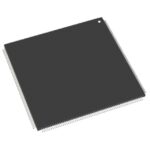 EP20K100QC240-2
The activity of extra discounts on wholesale prices is in full swing…
Please fill in your contact information and we will send you the latest wholesale price list.






