 ChipApex | Global Electronic Components Supplier
SEARCH
Search Product
Search Post
— IC芯片 | 连接器 | 传感器 | 被动器件 —
Search productSearch post
— IC芯片 | 连接器 | 传感器 | 被动器件 —
Consult the customer manager about the wholesale price.
consultation hotline:86-132-6715-2157
email:[email protected]
Contact the product manager for consultation. One-stop consultation is available.
Do you want a lower wholesale price? Please send us your inquiry and we will reply immediately.
The EPED001A-10-STD is a four-channel isolated USB-to-UART converter module manufactured by Electronic Prototypes. It supports the USB 2.0 protocol and provides UART interface connectivity with 1.5kV or 3kV isolation capabilities depending on the specific configuration variant. The device operates within a supply voltage range of 1.8V to 3.3V and draws a maximum supply current of 50 mA. It is designed for industrial applications requiring robust communication between USB hosts and serial devices, featuring an operating temperature range from -40°C to 55°C.
Verify the exact isolation rating (1.5kV vs 3kV) required for your specific application before ordering, as this parameter significantly impacts component selection. Confirm that the 50mA power budget aligns with your system's power supply constraints. Ensure the operating temperature range meets environmental requirements. Check for any specific firmware or driver dependencies associated with the USB-UART bridge chip used in this module.
Select this module when four isolated UART ports are necessary within a single compact form factor. Consider the 1.8V to 3.3V input voltage constraint to ensure compatibility with your logic levels. Evaluate the thermal performance within the -40°C to 55°C range against your enclosure design. Compare the isolation voltage requirements against industry standards relevant to your end product to ensure compliance.
This component belongs to the EPED001 series of isolated USB converters. It serves as a bridge solution for integrating legacy serial devices into modern USB-centric systems while maintaining electrical separation. The manufacturer focuses on providing specialized interface modules for niche industrial and embedded applications rather than general-purpose consumer electronics.
No direct public substitute part numbers are confirmed for this specific model. Alternative solutions may require designing custom isolated USB-to-UART circuits using discrete optocouplers or dedicated bridge controllers, which would increase board space and complexity.
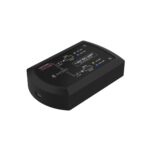 EPED001A-10-STD
The activity of extra discounts on wholesale prices is in full swing…
Please fill in your contact information and we will send you the latest wholesale price list.





