 ChipApex | Global Electronic Components Supplier

SEARCH
Search Product
Search Post
Search productSearch post
Consult the customer manager about the wholesale price.
consultation hotline:86-132-6715-2157
email:[email protected]
Contact the product manager for consultation. One-stop consultation is available.
Do you want a lower wholesale price? Please send us your inquiry and we will reply immediately.
EPM1270F256C3N is listed in the Complex Programmable Logic Devices range at ChipApex. The manufacturer field lists Altera. Its product description is IC CPLD 980MC 6.2NS 256FBGA. Review the specifications below when checking this part for your BOM.
The Altera EPM1270F256C3N is a Complex Programmable Logic Device (CPLD) belonging to the MAX II family. It features 980 macrocells, 127 logic array blocks (LABs), and 212 I/O pins housed in a 256-pin FBGA package. The device supports system-in-system programming via JTAG and utilizes non-volatile Flash memory for configuration retention. It operates at supply voltages of 2.5 V or 3.3 V, with a maximum operating frequency of 304 MHz and a typical propagation delay of 6.2 ns. The commercial temperature range spans from 0°C to +70°C.
Verify the specific suffix 'C3N' against the manufacturer's current ordering guide to confirm pinout compatibility and environmental compliance status. Check for any Product Change Notifications (PCNs) related to labeling or packaging updates. Confirm that the required operating temperature range aligns with the commercial grade specification (0°C to +70°C). Ensure design files are compatible with the supported Quartus software versions.
Select this component when a moderate logic density with non-volatile configuration is required. Compare the 980 macrocell count against alternative MAX II variants if higher I/O counts or different package sizes are needed. Verify that the 6.2 ns propagation delay meets the timing constraints of the target application. Consider the 256-FBGA footprint dimensions during PCB layout planning.
This part is a member of the Intel (formerly Altera) MAX II CPLD family, designed for cost-sensitive applications requiring low power consumption and easy integration. The MAX II series distinguishes itself by integrating Flash memory directly on-chip, eliminating the need for external configuration PROMs commonly found in older CPLD families. It serves as a bridge between simple discrete logic and more complex FPGAs.
Direct functional substitutes within the same package include other EPM1270 variants such as EPM1270F256C4N or EPM1270F256C5N, provided the speed grade and temperature rating match the design requirements. Cross-family replacements require careful verification of pin compatibility and logic resource availability.
Explore related parts through Embedded, Integrated Circuits (ICs), all product categories, ChipApex homepage.
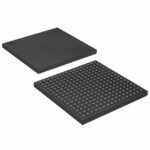 EPM1270F256C3N

The activity of extra discounts on wholesale prices is in full swing…
Please fill in your contact information and we will send you the latest wholesale price list.





