 ChipApex | Global Electronic Components Supplier

SEARCH
Search Product
Search Post
Search productSearch post
Consult the customer manager about the wholesale price.
consultation hotline:86-132-6715-2157
email:[email protected]
Contact the product manager for consultation. One-stop consultation is available.
Do you want a lower wholesale price? Please send us your inquiry and we will reply immediately.
EPM2210F256C4 is listed in the Complex Programmable Logic Devices range at ChipApex. The manufacturer field lists Altera. Its product description is IC CPLD 1700MC 7NS 256FBGA. Review the specifications below when checking this part for your BOM.
The Altera EPM2210F256C4 is a Complex Programmable Logic Device (CPLD) belonging to the MAX II family. It features 2,210 logic elements and 1,700 macrocells within a 256-pin FineLine BGA package. The device operates with internal supply voltages of 2.5V or 3.3V and supports MultiVolt I/O interfaces for 3.3V, 2.5V, 1.8V, and 1.5V logic levels. Key electrical parameters include a maximum propagation delay of 7 ns and a maximum operating frequency of 304 MHz. It utilizes non-volatile Flash technology for instant-on capability and includes an 8 Kbit User Flash Memory (UFM) block.
Verify the specific suffix 'C4' against official Intel/Altera documentation to confirm temperature range and speed grade, as datasheets often list generic family codes like 'C5'. Confirm RoHS compliance status, as older MAX II variants may have different environmental certifications. Check for active manufacturing status or obsolescence notices from the manufacturer before procurement planning.
Select this component when non-volatile programmability and instant-on operation are required without external configuration memory. Ensure the design accommodates the 256-FBGA package constraints and thermal requirements. Verify that the 204 available I/O pins meet the system interface needs and that the 7 ns delay meets timing constraints for the target clock frequencies.
The EPM2210F256C4 is part of the MAX II family, which succeeded earlier MAX families by integrating Flash technology. This family bridges the gap between simple PLDs and FPGAs, offering high density with lower power consumption. The EPM2210 variant represents the highest density option in the initial MAX II lineup, providing 2,210 logic elements.
Direct replacements within the MAX II family include EPM2210F256C5N or EPM2210F256A5, depending on temperature grade and RoHS requirements. Cross-family migration to MAX V or MAX 10 may be necessary if higher performance or additional embedded features are needed, though pin compatibility will likely require board redesign.
Explore related parts through Embedded, Integrated Circuits (ICs), all product categories, ChipApex homepage.
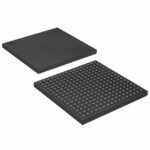 EPM2210F256C4

The activity of extra discounts on wholesale prices is in full swing…
Please fill in your contact information and we will send you the latest wholesale price list.





