 ChipApex | Global Electronic Components Supplier

SEARCH
Search Product
Search Post
— IC芯片 | 连接器 | 传感器 | 被动器件 —
Search productSearch post
— IC芯片 | 连接器 | 传感器 | 被动器件 —
Consult the customer manager about the wholesale price.
consultation hotline:86-132-6715-2157
email:[email protected]
Contact the product manager for consultation. One-stop consultation is available.
Do you want a lower wholesale price? Please send us your inquiry and we will reply immediately.
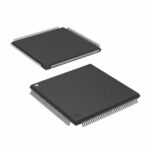
EPM570GT144C5 is listed in the Complex Programmable Logic Devices range at ChipApex. The manufacturer field lists Altera. Its product description is IC CPLD 440MC 5.4NS 144TQFP. Review the specifications below when checking this part for your BOM.
The Altera EPM570GT144C5 is a Complex Programmable Logic Device (CPLD) belonging to the MAX II family. It features 570 logic elements and 440 macrocells, housed in a 144-pin Thin Quad Flat Package (TQFP). The device operates with an internal supply voltage ranging from 1.71V to 1.89V and supports system-in-programmability via JTAG. Key electrical specifications include a maximum propagation delay of 5.4 ns and a maximum operating frequency of 304 MHz. It utilizes non-volatile Flash memory for configuration storage.
Verify the specific suffix 'G' against official Intel/Altera documentation to confirm package type and temperature grade. Ensure compatibility with Quartus Prime software versions supporting the MAX II family. Confirm RoHS compliance status through the manufacturer's current product change notices or datasheets prior to procurement.
Select this component when design requirements fit within 570 logic elements and 116 I/Os. The TQFP-144 package is suitable for surface-mount assembly with standard PCB footprint guidelines. Consider the 5.4 ns delay specification for timing closure in synchronous designs. Verify that the target application environment falls within the commercial temperature range if the 'C' suffix denotes commercial grade.
The EPM570GT144C5 is part of the MAX II family, which succeeded earlier CPLD lines like the MAX 7000 series. This family introduced Flash-based configuration, eliminating the need for external configuration devices. The MAX II series is designed for low-cost, low-power applications requiring moderate logic density and high reliability.
Direct replacements within the same package and pinout may include other variants in the EPM570 series such as EPM570T144C5N or EPM570GT144I5N, depending on required temperature ranges. Cross-family upgrades to MAX V or MAX 10 require significant schematic and firmware modifications due to architectural differences.
Explore related parts through Embedded, Integrated Circuits (ICs), all product categories, ChipApex homepage.
 EPM570GT144C5

The activity of extra discounts on wholesale prices is in full swing…
Please fill in your contact information and we will send you the latest wholesale price list.







