ChipApex | Global Electronic Components Supplier
SEARCH
Search Product
Search Post
— IC芯片 | 连接器 | 传感器 | 被动器件 —
Search productSearch post
— IC芯片 | 连接器 | 传感器 | 被动器件 —
Consult the customer manager about the wholesale price.
consultation hotline:86-132-6715-2157
email:[email protected]
Contact the product manager for consultation. One-stop consultation is available.
Do you want a lower wholesale price? Please send us your inquiry and we will reply immediately.
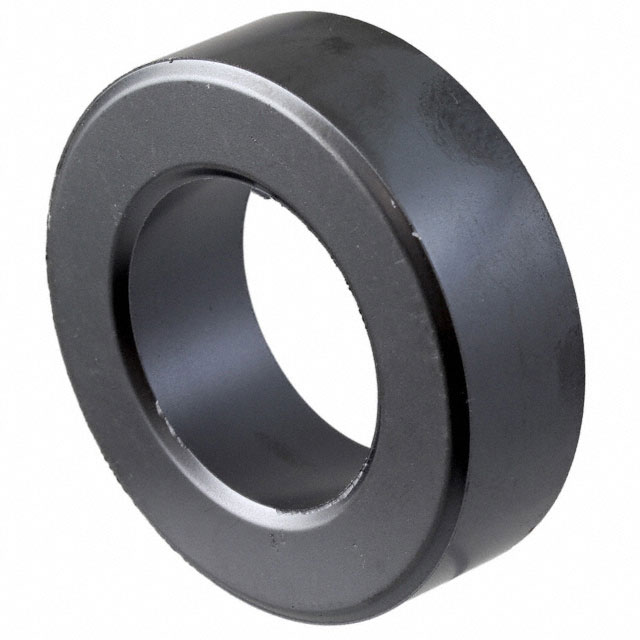
The KEMET ESD-R-47D-1 is a solid ferrite toroid core designed for electromagnetic interference suppression. It utilizes Nickel Zinc (NiZn) material, which provides high resistivity and effective attenuation at higher frequencies compared to Manganese Zinc alternatives. The component features an outer diameter of 25.5 mm and operates reliably within a temperature range from -25°C to +85°C. It is rated for signal frequencies up to 300 MHz, making it suitable for broadband noise reduction applications in electronic circuits.
Verify the specific Nickel Zinc composition and 300 MHz frequency rating against project requirements. Confirm physical dimensions match the 25.5 mm specification. Ensure environmental ratings align with the operational temperature limits. Cross-reference datasheets for exact impedance characteristics if critical circuit performance depends on precise frequency response curves.
Select this component when high-frequency noise attenuation is required, as Nickel Zinc offers superior performance over Manganese Zinc at frequencies exceeding 10 MHz. Consider the 25.5 mm inner diameter for cable fitment. Evaluate thermal constraints to ensure operation remains within the specified -25°C to +85°C range. Compare against other series like ESD-R-47SRH if lower frequency MnZn characteristics are needed instead.
This part belongs to the KEMET ESD-R series of ferrite toroids. While similar models exist using Manganese Zinc materials, the D-1 suffix indicates a Nickel Zinc formulation. This distinction is critical for applications requiring effective suppression in the VHF/UHF bands rather than lower frequency power line filtering.
Direct substitutes include other Nickel Zinc toroids with identical 25.5 mm dimensions. Verify that alternative parts maintain the 300 MHz frequency rating and +85°C maximum operating temperature. Generic MnZn cores may not provide equivalent high-frequency attenuation.
 ESD-R-47D-1
The activity of extra discounts on wholesale prices is in full swing…
Please fill in your contact information and we will send you the latest wholesale price list.