 ChipApex | Global Electronic Components Supplier

SEARCH
Search Product
Search Post
— IC芯片 | 连接器 | 传感器 | 被动器件 —
Search productSearch post
— IC芯片 | 连接器 | 传感器 | 被动器件 —
Consult the customer manager about the wholesale price.
consultation hotline:86-132-6715-2157
email:[email protected]
Contact the product manager for consultation. One-stop consultation is available.
Do you want a lower wholesale price? Please send us your inquiry and we will reply immediately.
ESP8266EX is listed in the RF Transceiver ICS range at ChipApex. The manufacturer field lists Espressif Systems. Its product description is IC RF TXRX+MCU WIFI 32QFN. Review the specifications below when checking this part for your BOM.
The ESP8266EX is a System-on-Chip (SoC) from Espressif Systems, integrating a Wi-Fi transceiver and a Tensilica L106 32-bit RISC processor. It operates within the 2.4 GHz to 2.5 GHz frequency range with a maximum data rate of 72.2 Mbps. The device supports a supply voltage between 2.5 V and 3.6 V, drawing up to 170 mA during transmission and 56 mA during reception. It features a 1 MB program memory size and delivers an output power of 20 dBm with a sensitivity of -72 dBm. Packaged in a QFN-32 (5x5 mm) format, it serves as a standalone wireless solution or a slave module.
Verify the component status carefully before procurement, as the ESP8266EX is designated as NRND (Not Recommended for New Designs). Ensure that the specific package variant matches the required PCB footprint. Confirm compatibility with existing firmware architectures, particularly regarding external Flash memory requirements and boot pin configurations. Validate that the supplier provides genuine Espressif Systems products to avoid counterfeit risks associated with older silicon generations.
Select this component primarily for cost-sensitive applications where established designs already utilize the ESP8266EX architecture. Consider its limitations in modern security standards and lower processing performance compared to newer SoCs. Evaluate the need for external Flash memory integration and antenna matching networks. This part is suitable for projects prioritizing BOM reduction over cutting-edge throughput or advanced cryptographic capabilities.
Released in 2014, the ESP8266EX pioneered the integration of full Wi-Fi protocol stacks into affordable microcontrollers. It significantly lowered the barrier to entry for IoT development by eliminating the need for separate Wi-Fi modules. Although superseded by newer series like the ESP32, it remains a foundational reference for understanding early IoT SoC design patterns and protocol stack implementations.
For new designs, consider the ESP8285 or ESP32 series as direct functional successors. The ESP8285 offers similar form factors but integrates internal Flash. The ESP32 provides enhanced performance, dual-core processing, and additional wireless standards. Verify pin compatibility and software library support when migrating from the ESP8266EX to these alternatives.
No, the ESP8266EX requires an external SPI Flash chip to store user code, file systems, and OTA partitions, as its internal ROM only contains the bootloader and basic drivers.
The chip supports Station (STA), SoftAP, and a combined STA+SoftAP mode, allowing it to connect to routers while simultaneously acting as an access point.
Explore related parts through RF and Wireless, all product categories, ChipApex homepage.
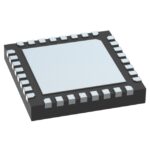 ESP8266EX

The activity of extra discounts on wholesale prices is in full swing…
Please fill in your contact information and we will send you the latest wholesale price list.






