ChipApex | Global Electronic Components Supplier
SEARCH
Search Product
Search Post
— IC芯片 | 连接器 | 传感器 | 被动器件 —
Search productSearch post
— IC芯片 | 连接器 | 传感器 | 被动器件 —
Consult the customer manager about the wholesale price.
consultation hotline:86-132-6715-2157
email:[email protected]
Contact the product manager for consultation. One-stop consultation is available.
Do you want a lower wholesale price? Please send us your inquiry and we will reply immediately.
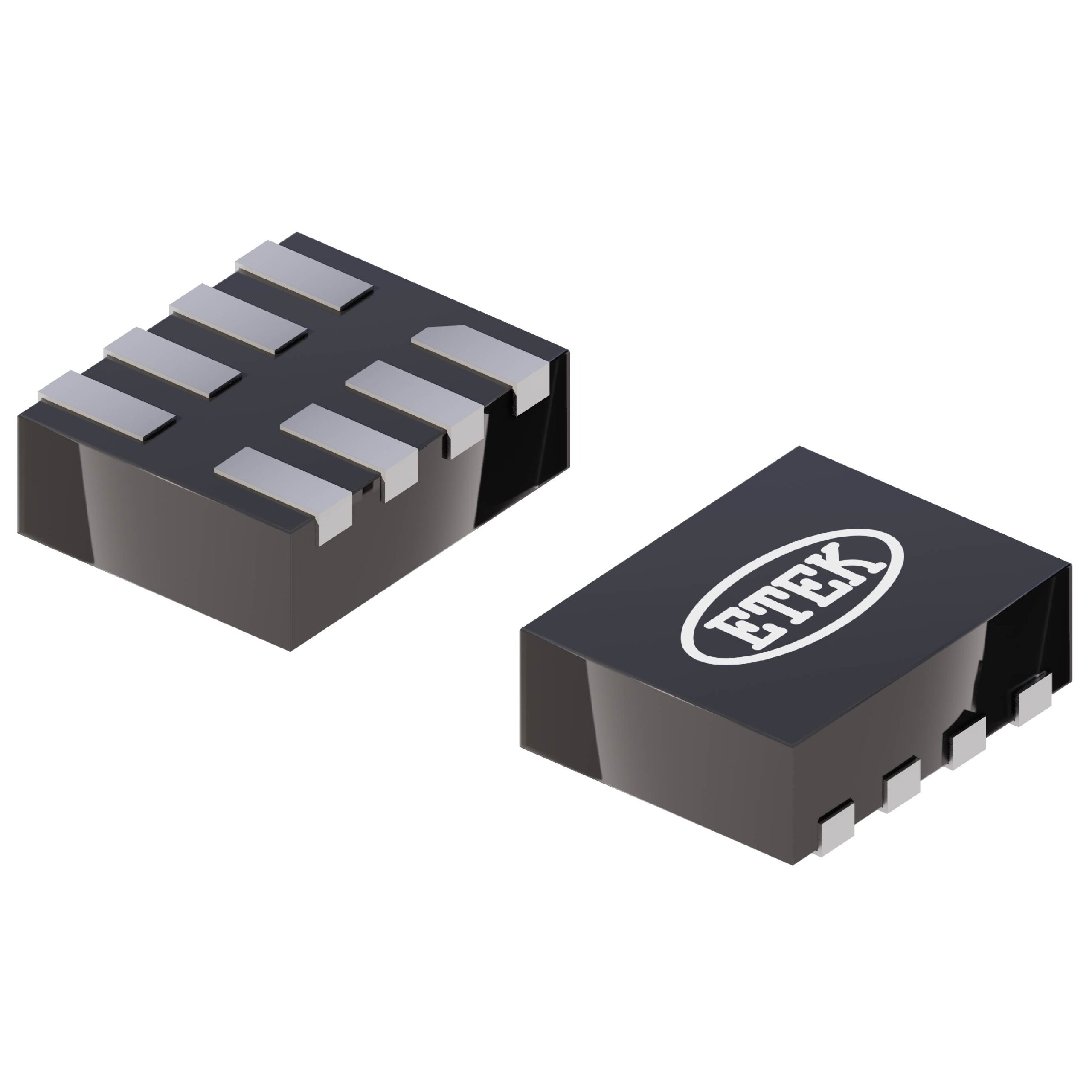
The ET2102 is a dual-channel bidirectional voltage-level translator IC designed for I2C bus compatibility. It supports configurable interfaces between any two logic levels ranging from 1.65V to 5.5V, accommodating both open-drain and push-pull environments. The device features internal 10kΩ pull-up resistors and automatic direction sensing, eliminating the need for external direction control signals or system GPIO resources. It ensures isolation between ports while allowing either VCCA or VCCB to power up first. If either supply rail drops to ground, the outputs switch to a high-impedance three-state condition.
Verify the manufacturer designation carefully, as the ET2102 identifier appears in multiple contexts within public databases. Confirm the specific datasheet matches the functional description of a dual-channel bidirectional level translator rather than other unrelated components sharing similar numeric codes. Ensure the package type corresponds to the 8-terminal leadless ultra-thin QFN (1.2mm x 1.4mm) specification if that form factor is required for your design.
Select this component when designing circuits requiring seamless voltage translation between varying logic standards without complex firmware overhead. It is suitable for applications needing isolated voltage domains on an I2C bus where automatic direction detection simplifies the hardware design. Consider the operating temperature range and voltage ratings to ensure compatibility with the target system's power rails and environmental conditions.
This component belongs to the category of interface bridge controllers, specifically focusing on voltage level translation for serial communication buses. It addresses the challenge of connecting devices operating at different supply voltages, such as 1.8V sensors to 3.3V or 5V microcontrollers, ensuring signal integrity across the interface boundary.
No, the device features automatic direction sensing functionality that detects input signals on either port and transmits them to the other port without needing external direction control pins.
If either VCCA or VCCB is removed or drops to ground, the internal power-down control circuit automatically switches the outputs to a three-state high-impedance condition.
 ET2102
The activity of extra discounts on wholesale prices is in full swing…
Please fill in your contact information and we will send you the latest wholesale price list.