 ChipApex | Global Electronic Components Supplier

SEARCH
Search Product
Search Post
— IC芯片 | 连接器 | 传感器 | 被动器件 —
Search productSearch post
— IC芯片 | 连接器 | 传感器 | 被动器件 —
Consult the customer manager about the wholesale price.
consultation hotline:86-132-6715-2157
email:[email protected]
Contact the product manager for consultation. One-stop consultation is available.
Do you want a lower wholesale price? Please send us your inquiry and we will reply immediately.
The ET8330A is a synchronous buck converter from ETEK Microelectronics featuring an I²C interface for programmable output voltage and dynamic voltage scaling. It delivers up to 3A continuous output current with integrated power MOSFETs, supporting input voltages from 2.5V to 5.5V and adjustable outputs between 0.6V and 5V. Operating at a high switching frequency of 2MHz, it utilizes ACOT control architecture for fast transient response and stability without external compensation.
Verify the specific suffix codes against official ETEK documentation to confirm pinout compatibility and thermal specifications. Ensure the ordering part number matches the required package type and temperature range. Cross-reference datasheet revisions to confirm feature availability, particularly regarding I²C address configurations and default startup states.
Select this component when board space is limited due to its high-frequency operation allowing smaller passive components. The I²C interface is essential for systems requiring dynamic voltage adjustment or remote monitoring. Verify that the load profile stays within the 3A continuous limit and that the input voltage remains within the specified 2.5V to 5.5V range for optimal efficiency.
ETEK Microelectronics specializes in high-performance analog and power management ICs for mobile and industrial applications. The ET8330A belongs to their series of synchronous buck converters designed to minimize external component counts. This product line targets modern electronics where size, efficiency, and digital controllability are critical design constraints.
Direct substitutes must match the 3A current rating, 2MHz switching frequency, and I²C interface. Check pin-to-pin compatibility if replacing in existing designs. Consider alternatives with similar ACOT-like control architectures to maintain transient performance without redesigning the compensation network.
No, the ACOT control architecture ensures stability with standard low-ESR output capacitors without external compensation components.
The I²C interface allows for programmable output voltage settings and supports dynamic voltage scaling operations.
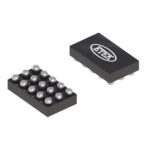 ET8330A

The activity of extra discounts on wholesale prices is in full swing…
Please fill in your contact information and we will send you the latest wholesale price list.





