 ChipApex | Global Electronic Components Supplier
SEARCH
Search Product
Search Post
— IC芯片 | 连接器 | 传感器 | 被动器件 —
Search productSearch post
— IC芯片 | 连接器 | 传感器 | 被动器件 —
Consult the customer manager about the wholesale price.
consultation hotline:86-132-6715-2157
email:[email protected]
Contact the product manager for consultation. One-stop consultation is available.
Do you want a lower wholesale price? Please send us your inquiry and we will reply immediately.
The FAN4800AUN is a highly integrated Power Factor Correction (PFC) and Pulse Width Modulation (PWM) combination controller manufactured by onsemi. Designed for AC-DC power supplies, it combines a Continuous Conduction Mode (CCM) boost PFC controller with average current mode control and a downstream PWM controller. The device operates within a supply voltage range of 11V to 26V and supports switching frequencies where fRTCT equals four times the PFC and PWM frequencies. It is housed in a 16-pin DIP package and functions reliably across an operating temperature range from -40°C to +105°C.
Verify component authenticity through authorized distribution channels due to potential counterfeit risks. Confirm that the specific suffix 'UN' corresponds to the 16-pin DIP package variant required for your design. Ensure compliance with RoHS standards if applicable to your manufacturing region. Review the latest product change notifications for any updates to pin configurations or electrical characteristics before finalizing procurement orders.
Select this component for designs requiring a compact solution combining PFC and PWM stages. It serves as a direct pin-to-pin replacement for legacy ML4800 and FAN4800 devices. Consider its low operating current for efficiency improvements in auxiliary power consumption. Verify that the 16-pin DIP package aligns with your PCB layout constraints and assembly capabilities.
The FAN4800AUN belongs to the FAN480X family of combination controllers, which are engineered to simplify AC-DC converter designs. This series integrates advanced compensation and protection features typically found in separate discrete components. The family targets high-performance power supplies where board space and component count are critical design parameters.
The FAN4800AUN is pin-compatible with ML4800, FAN4800, CM6800, and CM6800A. When replacing older versions like the standard FAN4800, adjust the RAC resistor value and RT/CT components to match the new frequency specifications. Note that soft-start capacitor requirements may differ from previous iterations.
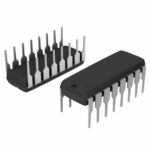 FAN4800AUN
The activity of extra discounts on wholesale prices is in full swing…
Please fill in your contact information and we will send you the latest wholesale price list.





