 ChipApex | Global Electronic Components Supplier
SEARCH
Search Product
Search Post
— IC芯片 | 连接器 | 传感器 | 被动器件 —
Search productSearch post
— IC芯片 | 连接器 | 传感器 | 被动器件 —
Consult the customer manager about the wholesale price.
consultation hotline:86-132-6715-2157
email:[email protected]
Contact the product manager for consultation. One-stop consultation is available.
Do you want a lower wholesale price? Please send us your inquiry and we will reply immediately.
The FAN4822IM is a Power Factor Correction (PFC) controller manufactured by Fairchild Semiconductor, now part of onsemi. It operates in average current mode for continuous boost topology with leading-edge modulation to achieve low total harmonic distortion. The device supports Zero Voltage Switching (ZVS) and functions within a supply voltage range of 12.8V to 14.2V. It has a startup current of 700 µA and a fixed switching frequency of 87 kHz. The component is rated for an operating temperature range from -40°C to +85°C and is housed in a 16-pin SOIC package.
Verify the manufacturer status carefully as Fairchild Semiconductor was acquired by onsemi. Confirm that the specific revision matches your design requirements. Check for obsolescence notices or lifecycle changes. Ensure the 16-pin SOIC footprint aligns with your PCB layout. Validate compatibility with your target input voltage and thermal management strategy before finalizing procurement.
Select this component for designs requiring average current mode control with ZVS capabilities. It is suitable for applications prioritizing low harmonic distortion. Consider the 87 kHz fixed frequency when designing magnetic components. Evaluate the 700 µA startup current against your system's power-up constraints. Ensure the SOIC-16 package fits within the available board space and thermal limits.
The FAN4822IM belongs to the family of PFC controllers designed for high-efficiency power conversion. Originally produced by Fairchild Semiconductor, it is now managed under the onsemi portfolio. This controller integrates features necessary for compliant power factor correction in standard AC-DC conversion stages, focusing on performance metrics like THD and switching efficiency.
Check for direct cross-reference part numbers from onsemi or other manufacturers offering equivalent average current mode PFC controllers with ZVS support. Verify pinout compatibility and electrical specifications such as supply voltage range and switching frequency before substitution.
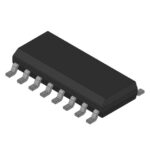 FAN4822IM
The activity of extra discounts on wholesale prices is in full swing…
Please fill in your contact information and we will send you the latest wholesale price list.






