 ChipApex | Global Electronic Components Supplier
SEARCH
Search Product
Search Post
— IC芯片 | 连接器 | 传感器 | 被动器件 —
Search productSearch post
— IC芯片 | 连接器 | 传感器 | 被动器件 —
Consult the customer manager about the wholesale price.
consultation hotline:86-132-6715-2157
email:[email protected]
Contact the product manager for consultation. One-stop consultation is available.
Do you want a lower wholesale price? Please send us your inquiry and we will reply immediately.
The FAN7711N is a ballast controller IC from onsemi, designed for electronic ballast applications. It operates within a frequency range of 48.7kHz to 57.3kHz and requires a supply voltage between 12.4V and 15.2V. The device draws a typical supply current of 3.2 mA and functions reliably across an operating temperature range of -25°C to 125°C. It is housed in an 8-DIP package with a width of 0.300 inches (7.62mm). This component is classified as obsolete and is no longer manufactured by the supplier.
Verify part status carefully as this component is officially listed as obsolete and no longer manufactured. Confirm availability through secondary market distributors if sourcing is required. Ensure that any replacement components meet the original electrical specifications and pinout compatibility. Check for RoHS compliance documentation if environmental regulations apply to the end product. Validate lead times and authenticity when purchasing from non-authorized sources due to the discontinued status.
Consider the FAN7711SMX or FAN7711MX variants if surface-mount technology is preferred over the through-hole DIP package offered by the N suffix. Evaluate the FAN7711M for similar performance characteristics in a smaller SOIC footprint. Ensure that the selected alternative supports the required 48.7kHz to 57.3kHz frequency range and 12.4V to 15.2V supply voltage constraints. Verify thermal management requirements against the -25°C to 125°C operating temperature specification.
The FAN7711N belongs to the FAN7711 family of ballast controllers produced by onsemi. This series includes various package options such as SOP, SOIC, and DIP configurations to accommodate different PCB layout requirements. The N suffix specifically denotes the 8-DIP through-hole package variant. These devices are engineered for cost-effective and reliable operation in lighting applications requiring precise frequency control.
The HT8822N is documented as a direct substitute for the FAN7711N. Verify pin compatibility and electrical parameters before implementation.
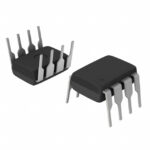 FAN7711N
The activity of extra discounts on wholesale prices is in full swing…
Please fill in your contact information and we will send you the latest wholesale price list.





