 ChipApex | Global Electronic Components Supplier
SEARCH
Search Product
Search Post
— IC芯片 | 连接器 | 传感器 | 被动器件 —
Search productSearch post
— IC芯片 | 连接器 | 传感器 | 被动器件 —
Consult the customer manager about the wholesale price.
consultation hotline:86-132-6715-2157
email:[email protected]
Contact the product manager for consultation. One-stop consultation is available.
Do you want a lower wholesale price? Please send us your inquiry and we will reply immediately.
The FAN7711SM is a gate driver and electronic ballast control IC manufactured by onsemi, formerly Fairchild Semiconductor. It operates within a temperature range of -25°C to 125°C and is available in 8-pin DIP or SOP packages. The device integrates an oscillator, preheat and dead-time control circuits, an adaptive zero-voltage switching (ZVS) controller, and high-side/low-side MOSFET gate drivers. It supports bootstrap floating channel voltages up to 600 V with low start-up current of 120 μA and operating current of 3.2 mA.
Verify the manufacturer status as the component is listed as obsolete or end-of-life. Confirm availability through authorized distributors or secondary markets. Ensure the specific suffix matches the required package type. Check RoHS compliance details against current regulatory requirements. Validate that the source document explicitly identifies the part number and its lifecycle stage.
Select this component for applications requiring integrated control and driving functions in fluorescent ballasts. Consider the operating temperature range and package options during PCB layout. Verify that the external resistor and capacitor values align with the desired frequency and preheat time settings. Ensure the supply voltage meets the UVLO thresholds for reliable startup.
The FAN7711 series represents a family of control ICs designed for electronic ballasts. The SM suffix typically denotes the SOP-8 package variant. This component consolidates multiple functions into a single chip to simplify circuit design and reduce component count in lighting applications.
Public confirmed substitute part numbers are not provided in the available documentation. Consult official replacement guides from the manufacturer for legacy component cross-references.
The preheat time is set by an external capacitor connected to the CPH pin, utilizing an internal 2 μA current source for linear charging.
An internal 15.2 V Zener clamp diode is connected in parallel across the VDD pin to limit voltage spikes.
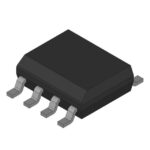 FAN7711SM
The activity of extra discounts on wholesale prices is in full swing…
Please fill in your contact information and we will send you the latest wholesale price list.





