 ChipApex | Global Electronic Components Supplier
SEARCH
Search Product
Search Post
— IC芯片 | 连接器 | 传感器 | 被动器件 —
Search productSearch post
— IC芯片 | 连接器 | 传感器 | 被动器件 —
Consult the customer manager about the wholesale price.
consultation hotline:86-132-6715-2157
email:[email protected]
Contact the product manager for consultation. One-stop consultation is available.
Do you want a lower wholesale price? Please send us your inquiry and we will reply immediately.
The FAN7930CM is a Critical Conduction Mode (CrM) Power Factor Correction (PFC) controller manufactured by onsemi. It utilizes voltage mode PWM control, comparing an internal ramp signal with the error amplifier output to generate MOSFET turn-off signals. This architecture eliminates the need for rectified AC line voltage sensing, reducing power loss in the input network. The device integrates comprehensive protection features including overvoltage protection (OVP), open-loop feedback protection, overcurrent protection (OCP), undervoltage lockout (UVLO), and input voltage missing detection.
Verify the exact suffix of the part number against official distribution channels, as variants such as FAN7930CMX-G or FAN7930DM exist with different packaging or lifecycle statuses. Confirm RoHS compliance and lead times directly with authorized suppliers. Ensure the selected variant matches the required package type and operational temperature range for the specific design implementation.
Select this component when designing CrM PFC stages requiring simplified input sensing and low harmonic distortion. The voltage mode control is suitable for applications prioritizing efficiency gains from removed sensing networks. Evaluate thermal requirements and ensure the SOP-8 package fits the PCB layout constraints. Compare against current-mode alternatives if specific frequency regulation characteristics are critical.
The FAN7930 series belongs to onsemi's portfolio of power management ICs designed for active PFC controllers. It serves as a core component in single-stage flyback and boundary-mode PFC designs. The family includes variants optimized for LED lighting and general power factor correction, supporting high power conversion efficiency standards in modern electronic equipment.
Public confirmed substitutes include the FL7930 series for LED-specific applications and other onsemi CrM PFC controllers. Verify pin compatibility and control loop stability before swapping. Check datasheets for differences in operating frequency ranges and protection thresholds.
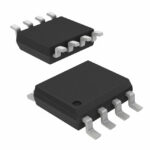 FAN7930CM
The activity of extra discounts on wholesale prices is in full swing…
Please fill in your contact information and we will send you the latest wholesale price list.






