 ChipApex | Global Electronic Components Supplier
SEARCH
Search Product
Search Post
— IC芯片 | 连接器 | 传感器 | 被动器件 —
Search productSearch post
— IC芯片 | 连接器 | 传感器 | 被动器件 —
Consult the customer manager about the wholesale price.
consultation hotline:86-132-6715-2157
email:[email protected]
Contact the product manager for consultation. One-stop consultation is available.
Do you want a lower wholesale price? Please send us your inquiry and we will reply immediately.
The Taiyo Yuden FAR-F5KB-881M50-B4ED-Z is a Surface Acoustic Wave (SAW) filter designed for signal conditioning in wireless communication systems. It operates at a center frequency of 881.5 MHz with a bandwidth of 25 MHz, targeting Band 5 and BC0 applications within W-CDMA/CDMA networks. The device features a typical insertion loss of 1.5 dB and provides high attenuation of 61 dB to suppress unwanted signals. Packaged in a compact 1.4 mm x 1.0 mm SMD/SMT footprint, it supports receiver-type functions. The component is rated for operation between -40°C and +85°C, ensuring reliability in mobile infrastructure and handsets.
Verify the current product status before procurement, as this specific part number may be classified as obsolete or non-preferred by the manufacturer. Confirm availability through authorized distributors or secondary markets if direct supply is discontinued. Ensure that the replacement components meet all original electrical specifications and mechanical dimensions to maintain system integrity. Request updated datasheets to verify any potential design changes or end-of-life notices associated with this legacy component.
Select this component specifically for W-CDMA and CDMA systems requiring Band 5 or BC0 coverage. The choice is driven by the need for a SAW filter with a precise 881.5 MHz center frequency and 25 MHz bandwidth. Consider the 1.5 dB insertion loss and 61 dB attenuation characteristics when designing the receiver chain. The small 1.4x1.0 mm package size makes it suitable for modern mobile devices where board space is limited. Ensure compatibility with the target operating temperature range of -40°C to +85°C.
This component belongs to Taiyo Yuden's SAW filter series, which are widely used in mobile communications for frequency selection and interference rejection. The FAR prefix typically denotes a specific family of SAW devices optimized for various cellular bands. As a receiver-type filter, it plays a critical role in improving signal-to-noise ratio by attenuating out-of-band signals before they reach the low-noise amplifier. This specific model addresses legacy but still relevant CDMA/W-CDMA band requirements.
Public confirmed substitute part numbers: None identified.
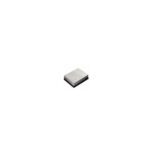 FAR-F5KB-881M50-B4ED-Z
The activity of extra discounts on wholesale prices is in full swing…
Please fill in your contact information and we will send you the latest wholesale price list.






