 ChipApex | Global Electronic Components Supplier

SEARCH
Search Product
Search Post
— IC芯片 | 连接器 | 传感器 | 被动器件 —
Search productSearch post
— IC芯片 | 连接器 | 传感器 | 被动器件 —
Consult the customer manager about the wholesale price.
consultation hotline:86-132-6715-2157
email:[email protected]
Contact the product manager for consultation. One-stop consultation is available.
Do you want a lower wholesale price? Please send us your inquiry and we will reply immediately.
The FDA803D-EHX is a single-channel Class-D digital input automotive power amplifier manufactured by STMicroelectronics. It delivers 45 W of output power into a 4 Ohm load with a total harmonic distortion plus noise of 0.01%. The device operates on a supply voltage ranging from 3.3 V to 18 V and features a low operating supply current of 1 uA. It is housed in a PowerSSO-36 package designed for surface mount installation. The component supports an extended operating temperature range from -40°C to +125°C and holds AEC-Q100 qualification for automotive reliability.
Verify the specific suffix EHX against the official datasheet to confirm packaging and material specifications. Ensure compatibility with the target PCB footprint for the PowerSSO-36 package. Confirm that the design accounts for the specified thermal management requirements given the 125°C maximum operating temperature rating. Cross-reference the AEC-Q100 qualification status with project quality standards.
Select this component when a single-channel, digitally controlled amplifier with integrated diagnostics is required for automotive environments. The wide supply voltage range accommodates various vehicle electrical architectures. The low standby current aids in battery conservation. Verify that the digital input interface matches the source processor's protocol before finalizing the selection.
This part belongs to the FDA803D series of automotive power amplifiers from STMicroelectronics. The series is designed for robust performance in harsh automotive environments. The FDA803D-EHX variant specifically denotes the tube packaging configuration as indicated by distributor listings. It shares core electrical characteristics with other variants in the family, differing primarily in packaging and handling specifications.
The FDA803D-EHT is a documented alternative within the same product family, offering identical electrical performance but in tape-and-reel packaging. Both parts share the same PowerSSO-36 footprint and functional specifications. Designers should verify that the change in packaging does not impact assembly processes or inventory management strategies.
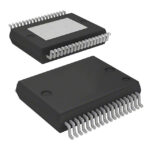 FDA803D-EHX

The activity of extra discounts on wholesale prices is in full swing…
Please fill in your contact information and we will send you the latest wholesale price list.






