 ChipApex | Global Electronic Components Supplier
SEARCH
Search Product
Search Post
— IC芯片 | 连接器 | 传感器 | 被动器件 —
Search productSearch post
— IC芯片 | 连接器 | 传感器 | 被动器件 —
Consult the customer manager about the wholesale price.
consultation hotline:86-132-6715-2157
email:[email protected]
Contact the product manager for consultation. One-stop consultation is available.
Do you want a lower wholesale price? Please send us your inquiry and we will reply immediately.
The FDC2112DNTRQ1 is a two-channel capacitance-to-digital converter designed for automotive applications, certified to AEC-Q100 standards. It features a 12-bit resolution and supports an I2C interface with a maximum clock frequency of 400 kHz. The device operates within a supply voltage range of 2.7 V to 3.6 V and functions across an extended temperature range from -40°C to +125°C. Packaged in a DSBGA-16 format, it integrates high-resolution sensing capabilities suitable for proximity detection and touch interfaces in demanding environments.
Verify the complete part number including the Q1 suffix for automotive qualification status. Confirm the package type matches the design requirements. Check the datasheet for specific ordering information regarding tape and reel quantities. Ensure compatibility with the target I2C bus voltage levels. Validate the operating temperature range against the final application environment specifications.
Select this component when automotive certification is mandatory for the project. Choose this model over non-automotive variants if long-term availability and reliability are critical. Consider the 12-bit resolution limit compared to higher-resolution counterparts if sub-picofarad precision is required. Evaluate the DSBGA-16 footprint constraints during PCB layout planning. Verify that the I2C address configuration meets the system addressing scheme.
This device belongs to the FDC2x1x family of capacitance-to-digital converters from Texas Instruments. The family includes variants like the FDC2114 and FDC2212, which offer different channel counts or resolution options. The FDC2112 specifically targets cost-sensitive automotive applications requiring two channels. It shares architectural similarities with industrial grade parts but undergoes stricter qualification processes.
The FDC2112QDNTTQ1 is a verified alternative variant within the same series. Both devices share identical functional specifications and automotive qualifications. Verify pinout compatibility before substitution. Confirm that the specific package marking and traceability requirements match the assembly process.
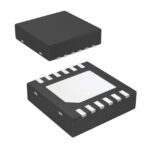 FDC2112DNTR
The activity of extra discounts on wholesale prices is in full swing…
Please fill in your contact information and we will send you the latest wholesale price list.





