ChipApex | Global Electronic Components Supplier
SEARCH
Search Product
Search Post
— IC芯片 | 连接器 | 传感器 | 被动器件 —
Search productSearch post
— IC芯片 | 连接器 | 传感器 | 被动器件 —
Consult the customer manager about the wholesale price.
consultation hotline:86-132-6715-2157
email:[email protected]
Contact the product manager for consultation. One-stop consultation is available.
Do you want a lower wholesale price? Please send us your inquiry and we will reply immediately.
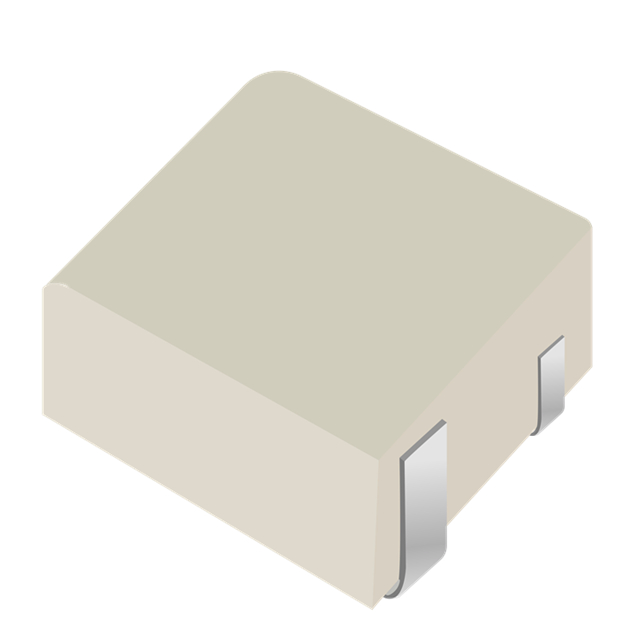
The FL455K0000S0A1 is a surface-mount ceramic filter manufactured by NextGen Components, designed for AM radio applications. It features a center frequency of 455 kHz and operates with a maximum insertion loss of 4.0 dB. The component exhibits a minimum 6 dB bandwidth of ±17.5 kHz, ensuring precise signal filtering characteristics. Physically, it utilizes a 3-SMD J-Lead package with dimensions of 6.5 mm in length, 6.0 mm in width, and 4.2 mm in height. This configuration supports reliable integration into compact electronic circuits requiring stable intermediate frequency performance.
Verify the exact datasheet specifications against the manufacturer's official documentation before procurement. Confirm that the 4.0 dB maximum insertion loss and ±17.5 kHz minimum bandwidth meet your circuit requirements. Ensure compatibility with the 3-SMD J-Lead mounting style and L6.5*W6.0*H4.2mm physical dimensions during PCB layout design to prevent mechanical interference.
Select this component when a 455 kHz center frequency is required for AM signal processing. Consider the 4.0 dB insertion loss limit if signal attenuation must be minimized. The 3-SMD J-Lead package is suitable for surface mount technology processes. Verify that the ±17.5 kHz minimum 6 dB bandwidth aligns with the desired channel selectivity for the specific application environment.
This part belongs to the FL Series of SMD ceramic filters from NextGen Components. It shares dimensional similarities with other models in the CFTC U series, such as the FL455K0000S003, which also uses the L6.5*W6.0*H4.2mm form factor. While these components share physical attributes, their electrical parameters like insertion loss and bandwidth may vary, necessitating careful review of individual datasheets for each specific part number.
Cross-reference with other 455 kHz SMD ceramic filters in the 3-SMD J-Lead package. Verify that substitute parts match the 6.5x6.0x4.2mm dimensions and maintain comparable insertion loss and bandwidth specifications to ensure circuit functionality remains unchanged.
 FL455K0000S0A1
The activity of extra discounts on wholesale prices is in full swing…
Please fill in your contact information and we will send you the latest wholesale price list.