ChipApex | Global Electronic Components Supplier
SEARCH
Search Product
Search Post
— IC芯片 | 连接器 | 传感器 | 被动器件 —
Search productSearch post
— IC芯片 | 连接器 | 传感器 | 被动器件 —
Consult the customer manager about the wholesale price.
consultation hotline:86-132-6715-2157
email:[email protected]
Contact the product manager for consultation. One-stop consultation is available.
Do you want a lower wholesale price? Please send us your inquiry and we will reply immediately.
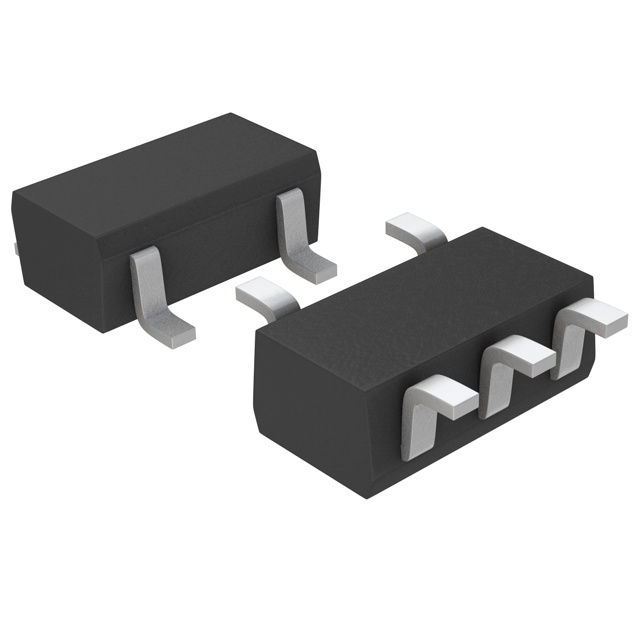
The FMA7AT148 is a dual pre-biased NPN transistor array manufactured by ROHM Semiconductor. It integrates two NPN transistors with built-in biasing resistors in an SMT5 (SOT-753) surface-mount package. The device supports a collector-emitter voltage of 50V and a continuous collector current of 100mA. Key electrical parameters include a base input resistance of 4.7 kOhms, an emitter-base resistance of 10 kOhms, and a minimum DC current gain of 30 at 10mA and 5V. The saturation voltage is specified as 300mV at 500µA base current and 10mA collector current. It features a transition frequency of 250MHz, a maximum power dissipation of 300mW, and operates up to a junction temperature of +150°C.
Verify the specific suffix T148 against the manufacturer's latest datasheet to confirm pinout compatibility and RoHS status. Ensure the ordering quantity aligns with standard reel sizes if bulk procurement is required. Cross-reference the part number with authorized distributors to confirm current availability and lead times before finalizing supply chain plans.
Select this component when a dual NPN configuration with integrated biasing is required to reduce external component count. Compare the 4.7kOhm base resistance against application requirements to ensure adequate drive current. Verify that the 50V voltage rating and 100mA current capacity exceed the maximum expected load conditions for reliable operation.
This part belongs to the FMA series of pre-biased transistors from ROHM Semiconductor. It serves as a discrete alternative to complex transistor arrays, offering a compact solution for dual-channel switching needs. The SMT5 package allows for automated surface-mount assembly, integrating well with modern PCB manufacturing processes for small form-factor devices.
The DTA143XE is listed as a similar product in available documentation. Verify pinout compatibility and electrical parameter alignment before substitution. Check for any differences in packaging or thermal characteristics that may affect board layout and heat dissipation performance.
 FMA7AT148
The activity of extra discounts on wholesale prices is in full swing…
Please fill in your contact information and we will send you the latest wholesale price list.