ChipApex | Global Electronic Components Supplier
SEARCH
Search Product
Search Post
— IC芯片 | 连接器 | 传感器 | 被动器件 —
Search productSearch post
— IC芯片 | 连接器 | 传感器 | 被动器件 —
Consult the customer manager about the wholesale price.
consultation hotline:86-132-6715-2157
email:[email protected]
Contact the product manager for consultation. One-stop consultation is available.
Do you want a lower wholesale price? Please send us your inquiry and we will reply immediately.
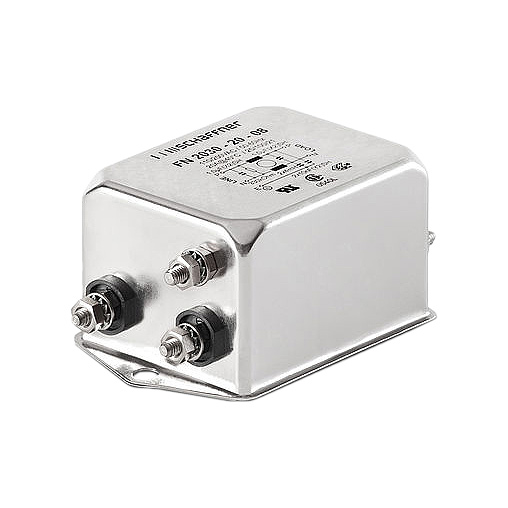
The Schaffner FN2030A-3-06 is a single-phase, single-stage EMI power line filter designed for chassis mounting. It supports a rated current of 3 A and a voltage of 250 VAC/DC within a frequency range of 0 Hz to 400 Hz. The component utilizes faston terminals for connection and features low capacitance characteristics. Key electrical parameters include a leakage current of 70 mA and a power loss of 0.9 W at rated conditions. Physical dimensions are 50.5 mm in length, 44.5 mm in width, and 22.3 mm in height.
Verify the specific terminal pitch and insulation requirements against the system board layout before ordering. Confirm that the 70 mA leakage current aligns with safety standards for the intended medical or industrial application. Ensure the chassis mounting holes match the mechanical specifications provided in the official datasheet to guarantee proper grounding and physical stability during operation.
Select this model when low input capacitance is critical to prevent nuisance tripping of upstream circuit breakers or to maintain signal integrity in sensitive circuits. The 3 A rating suits moderate load applications where compact size is preferred over higher current capacity. Consider the faston termination type if soldering is not feasible or if modular replacement is required. Verify compliance with UL, CSA, and IEC/EN standards for the target market.
This component belongs to the FN2030 series of single-phase EMI filters manufactured by TE Connectivity / Schaffner. The series offers various current ratings and termination options to accommodate diverse power line filtering needs. The 'A' suffix typically denotes specific internal configurations such as low capacitance variants within the broader product family.
Direct substitutes may include other Schaffner FN2030 series models with identical current and voltage ratings but different terminal styles. Cross-referencing with TE Connectivity's official substitution guides is recommended to ensure compatibility with existing mechanical and electrical constraints.
 FN2030A-3-06
The activity of extra discounts on wholesale prices is in full swing…
Please fill in your contact information and we will send you the latest wholesale price list.