ChipApex | Global Electronic Components Supplier

SEARCH
Search Product
Search Post
— IC芯片 | 连接器 | 传感器 | 被动器件 —
Search productSearch post
— IC芯片 | 连接器 | 传感器 | 被动器件 —
Consult the customer manager about the wholesale price.
consultation hotline:86-132-6715-2157
email:[email protected]
Contact the product manager for consultation. One-stop consultation is available.
Do you want a lower wholesale price? Please send us your inquiry and we will reply immediately.
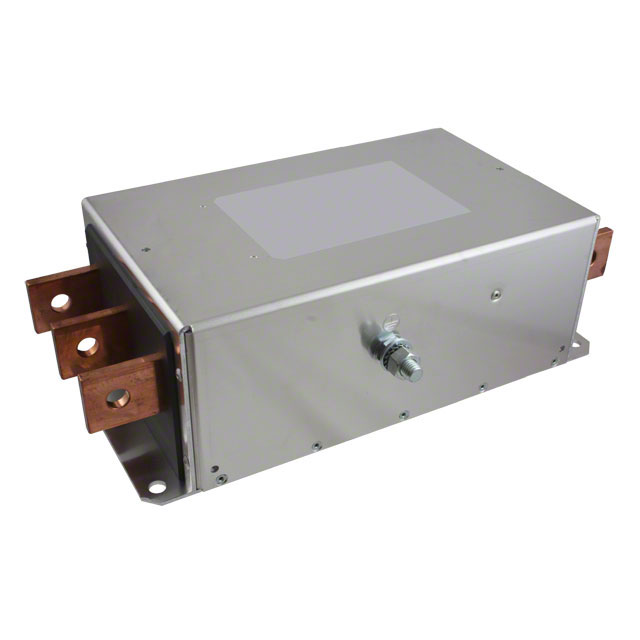
The FN3270H-400-99 is a three-phase power line filter manufactured by Schaffner EMC Inc. Designed for high-current industrial applications, this component provides electromagnetic interference suppression in AC power systems. It features a robust construction suitable for demanding environments, ensuring compliance with international EMC standards. The unit integrates advanced filtering technology to attenuate conducted emissions across specified frequency ranges, protecting sensitive equipment from electrical noise while maintaining stable power delivery under continuous load conditions.
Verify the specific part number against official Schaffner documentation to ensure compatibility with your system requirements. Confirm that the rated voltage and current specifications match your application's electrical parameters before procurement. Check for any required certifications or regional compliance markings necessary for your installation location. Ensure proper handling procedures are followed due to the component's weight and size.
Select this model when high current handling capability and robust EMI suppression are required for three-phase systems. Evaluate the physical dimensions and mounting options to ensure fit within your enclosure design. Consider the thermal management requirements associated with continuous operation at full load. Verify that the filter's insertion loss characteristics meet the specific EMC standards applicable to your end product.
This component belongs to Schaffner's FN3270 series of power line filters, which are widely used in industrial automation and power electronics. The series is known for its reliability and performance in mitigating electrical noise generated by switching power supplies and motor controllers. The FN3270H variant specifically addresses higher current demands typical in heavy-duty industrial applications.
Consult Schaffner's official cross-reference guides for direct replacements. Ensure substitute components match the original's current rating, voltage class, and physical footprint. Verify that alternative models provide equivalent attenuation performance across the required frequency spectrum.
 FN3270H-400-99

The activity of extra discounts on wholesale prices is in full swing…
Please fill in your contact information and we will send you the latest wholesale price list.