ChipApex | Global Electronic Components Supplier

SEARCH
Search Product
Search Post
— IC芯片 | 连接器 | 传感器 | 被动器件 —
Search productSearch post
— IC芯片 | 连接器 | 传感器 | 被动器件 —
Consult the customer manager about the wholesale price.
consultation hotline:86-132-6715-2157
email:[email protected]
Contact the product manager for consultation. One-stop consultation is available.
Do you want a lower wholesale price? Please send us your inquiry and we will reply immediately.
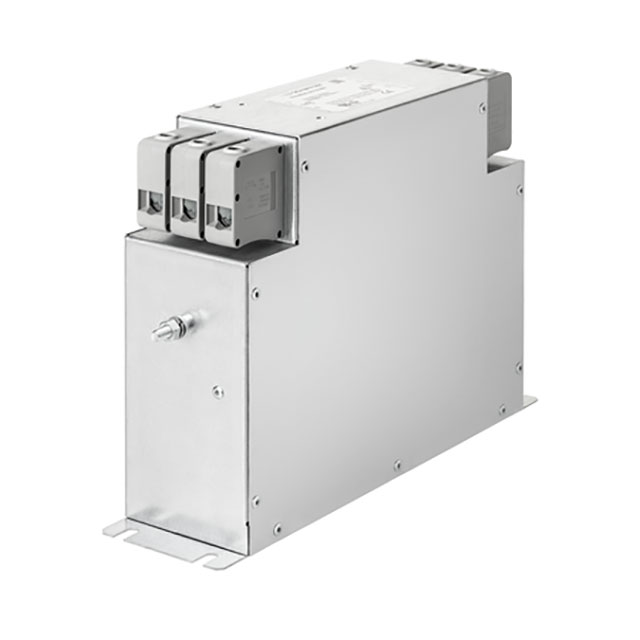
The Schaffner FN3288-160-40-C26-R65 is a three-phase EMC line filter designed for inverter and power drive systems. It supports a maximum current of 160 A and operates at voltages up to 530 V AC or 305 V DC, with a frequency range of DC to 60 Hz. The unit utilizes a two-stage terminal block configuration and features chassis mounting. Key electrical parameters include a leakage current of 6 mA and a capacitance value of 2.2 nF. It functions within an operating temperature range of -40°C to 100°C.
Verify the specific part number suffix against official Schaffner documentation to ensure correct voltage and current ratings. Confirm that the terminal block interface matches existing wiring harnesses. Check compliance certifications required for the target market. Ensure chassis mounting provisions align with the enclosure design. Validate thermal management requirements given the 100°C maximum operating temperature.
Select this model when high current capacity of 160 A is required alongside strict EMI reduction in three-phase applications. Consider the book-style design for space-constrained environments. Ensure the 530 V AC rating exceeds the system's peak voltage. Verify that the terminal block connection method suits the assembly process. Evaluate the leakage current specification against safety standards.
This component belongs to the FN 3287/FN 3288 series by Schaffner EMC Inc., which specializes in compact EMC filters for industrial drives. The series is characterized by its slim profile and high performance in suppressing conducted emissions. It serves as a critical component for maintaining electromagnetic compatibility in sensitive electronic environments powered by variable frequency drives.
Consult official Schaffner cross-reference lists for verified substitutes. Ensure any replacement maintains the 160 A current rating and 530 V AC voltage capability. Verify identical terminal block configuration and chassis mounting dimensions. Confirm equivalent attenuation characteristics across the relevant frequency spectrum.
 FN3288-160-40-C26-R65

The activity of extra discounts on wholesale prices is in full swing…
Please fill in your contact information and we will send you the latest wholesale price list.