ChipApex | Global Electronic Components Supplier

SEARCH
Search Product
Search Post
— IC芯片 | 连接器 | 传感器 | 被动器件 —
Search productSearch post
— IC芯片 | 连接器 | 传感器 | 被动器件 —
Consult the customer manager about the wholesale price.
consultation hotline:86-132-6715-2157
email:[email protected]
Contact the product manager for consultation. One-stop consultation is available.
Do you want a lower wholesale price? Please send us your inquiry and we will reply immediately.
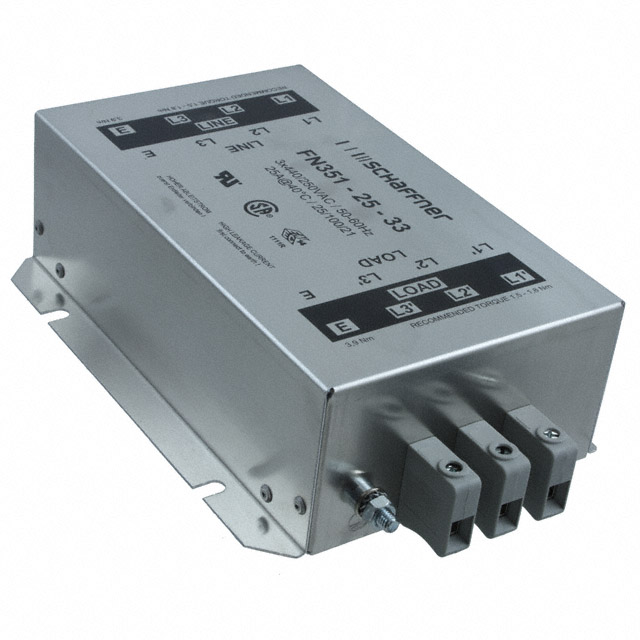
The Schaffner FN351-25-33 is a single-stage EMC/EMI line filter designed for three-phase Delta configurations. It features a rated current of 25A and supports voltages up to 520VAC. The component utilizes terminal block input and output connections, facilitating secure electrical interfacing in industrial environments. Designed for chassis mounting, it operates within a temperature range of -25°C to 100°C. This filter provides effective noise suppression for power lines, ensuring compliance with electromagnetic compatibility standards while maintaining structural integrity under standard industrial operating conditions.
Verify the specific configuration requirements against official datasheets before procurement. Confirm that the terminal block interface matches existing wiring infrastructure. Ensure the chassis mounting dimensions align with the target enclosure space. Validate voltage and current ratings against the actual load parameters to prevent operational failure. Check for required regulatory certifications such as CE or CSA depending on the deployment region.
Select this model when a single-stage solution is sufficient for the intended noise reduction levels. Consider the 25A current rating to ensure adequate capacity for the connected load. Evaluate the terminal block connection type against available cable options. Assess the thermal performance within the expected operating environment limits. Compare alternative models only if higher current capacity or different termination styles are required.
This component belongs to the Schaffner FN351 series, which offers a broad range of power ratings for general-purpose EMC filtering applications. The series is engineered for fast and convenient filter selection across various industrial equipment types. It represents a standardized approach to electromagnetic interference mitigation in power line applications.
Public confirmed substitute part numbers are not provided in the available documentation. Verify compatibility with direct replacements by cross-referencing technical specifications.
 FN351-25-33

The activity of extra discounts on wholesale prices is in full swing…
Please fill in your contact information and we will send you the latest wholesale price list.