 ChipApex | Global Electronic Components Supplier
SEARCH
Search Product
Search Post
— IC芯片 | 连接器 | 传感器 | 被动器件 —
Search productSearch post
— IC芯片 | 连接器 | 传感器 | 被动器件 —
Consult the customer manager about the wholesale price.
consultation hotline:86-132-6715-2157
email:[email protected]
Contact the product manager for consultation. One-stop consultation is available.
Do you want a lower wholesale price? Please send us your inquiry and we will reply immediately.
The Forlinx FET1012A-C is a system-on-module based on the NXP LS1012A processor, featuring an ARM Cortex-A53 architecture with a maximum clock speed of 1GHz. The module integrates 512MB of DDR3L RAM and storage comprising 8GB eMMC alongside 16MB QSPI NorFlash. It supports Ubuntu 18.04 and OpenWrt operating systems. Key hardware features include up to two 2.5Gbps Ethernet controllers equipped with a Packet Forwarding Engine (PFE), PCIe 2.0, SATA 3.0, and USB 3.0 interfaces. Designed for low-power applications, the core board consumes approximately 1.3W at idle and 1.9W under full load.
Verify that the specific order includes the FET1012A-C core board and matches the required OS image, typically ForlinxDesktop or OpenWrt. Confirm the presence of the 8GB eMMC and 16MB QSPI NorFlash configuration. Ensure compatibility with the carrier board using the 45x40mm board-to-board connector specification. Check for CE, FCC, and RoHS certification documentation if required for regional deployment.
Select this module when high-speed packet processing is required due to its dedicated PFE hardware. It is suitable for designs needing multiple 2.5Gbps Ethernet ports within a compact footprint. Consider the 512MB RAM limit for complex Linux distributions; ensure the chosen OS fits within memory constraints. Verify that the application environment falls within the -40°C to +80°C operating temperature range.
This module is part of the Forlinx Embedded FET series, designed around the NXP LS1012A SoC. It utilizes a core board plus carrier board architecture to separate processor logic from peripheral I/O. The FET1012A-C specifically targets networking and industrial control markets, offering a balance of processing power and energy efficiency compared to higher-end NXP Layerscape processors.
Publicly confirmed substitute part numbers are not available in the provided documentation. Alternative solutions would require evaluating other NXP Layerscape-based modules or different manufacturers' Cortex-A53 SOMs, ensuring pin compatibility with existing carrier boards or designing new hardware.
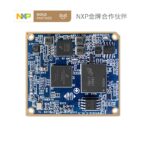 FORLINX-FET1012A-C+10512MOE01IA11
The activity of extra discounts on wholesale prices is in full swing…
Please fill in your contact information and we will send you the latest wholesale price list.






