 ChipApex | Global Electronic Components Supplier
SEARCH
Search Product
Search Post
— IC芯片 | 连接器 | 传感器 | 被动器件 —
Search productSearch post
— IC芯片 | 连接器 | 传感器 | 被动器件 —
Consult the customer manager about the wholesale price.
consultation hotline:86-132-6715-2157
email:[email protected]
Contact the product manager for consultation. One-stop consultation is available.
Do you want a lower wholesale price? Please send us your inquiry and we will reply immediately.
The FT24C02A-USR-B is a 2Kb (256 x 8) serial EEPROM manufactured by Fremont Micro Devices Ltd. It features an I²C interface with a maximum clock frequency of 1 MHz at 5V and 400 kHz at lower voltages. The device operates within a supply voltage range of 1.8V to 5.5V and supports an industrial temperature range of -40°C to 85°C. Key electrical parameters include a write cycle time of 5ms, access time of 550ns, and standby current typically below 1µA. It is housed in an 8-pin SOP package.
Verify that the ordering suffix 'USR-B' corresponds to the RoHS-compliant SOP-8 tube packaging as specified in the manufacturer's order code table. Confirm the specific revision level matches your design requirements, as datasheet specifications are subject to change without notice. Ensure compatibility with your system's I²C address configuration, noting that this variant utilizes all eight pins for full functionality compared to the five-pin alternative versions.
Select this component when a complete 8-pin interface is required for multi-device I²C bus configurations, unlike the 5-pin variants which limit bus scalability. The wide voltage range allows direct interfacing with both 1.8V and 5V logic levels without level shifting. Consider the 550ns access time and 1MHz clock speed for applications requiring moderate data throughput. Verify that the SOP-8 package dimensions fit within the available PCB real estate constraints.
This part belongs to the FT24C02A series of serial EEPROMs from Fremont Micro Devices Ltd. The series includes various package options such as DIP, TSSOP, DFN, and SOT-23, along with different pin configurations. The '-Uxx' designation indicates the version with 8 valid pins suitable for all applications, distinguishing it from the '-5xx' low-cost version limited to single-device buses.
FT24C02A-UDG-B
The Uxx version provides 8 valid pins suitable for all applications, including multiple devices on the same I²C bus. The 5xx version has only 5 valid pins and is restricted to applications with only one EEPROM on the bus.
Connecting the WP pin to VCC or VIH disables all programming functions, protecting the memory array. Programming is allowed if the pin is left unconnected or connected to VIL.
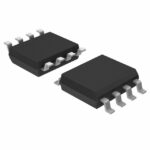 FT24C02A-USR-B
The activity of extra discounts on wholesale prices is in full swing…
Please fill in your contact information and we will send you the latest wholesale price list.





