 ChipApex | Global Electronic Components Supplier
SEARCH
Search Product
Search Post
— IC芯片 | 连接器 | 传感器 | 被动器件 —
Search productSearch post
— IC芯片 | 连接器 | 传感器 | 被动器件 —
Consult the customer manager about the wholesale price.
consultation hotline:86-132-6715-2157
email:[email protected]
Contact the product manager for consultation. One-stop consultation is available.
Do you want a lower wholesale price? Please send us your inquiry and we will reply immediately.
The Connor Winfield FTS250-HP-010.0M is a GPS/GNSS-driven mixed-signal phase lock loop module providing precision timing and synchronization. It generates a 10 MHz CMOS output, a 10 MHz sine output (~9 dBm), and a 1 PPS CMOS output from an onboard low jitter VCXO. The unit locks to a 1 PPS reference derived from the integrated LEA-M8F GPS receiver but can also synchronize to external 10 MHz or 1 PPS references via mode control inputs. Operating on a +3.3 V supply with current consumption of 270 mA (VCC1) and 36 mA (VCC2), it features three selectable alarm outputs for Loss-of-Lock, Holdover, and Antenna Fault status.
Verify the specific holdover thermal stability option required for the application environment. The model suffix indicates the oscillator type used for holdover performance; standard configurations utilize TCXO options such as T1 (±200ppb at -40°C to 85°C). Confirm that the selected variant matches the necessary frequency stability specifications before procurement.
Select the appropriate holdover specification based on operating temperature requirements. Options include TCXO variants like T1 (-40°C to 85°C, ±200ppb) or T2 (0°C to 70°C, ±100ppb), and OCXO variants like O1 (±10ppb) or O2 (±20ppb). Ensure the design accommodates the physical dimensions of the 28-pin DIP module and provides adequate clearance for the SMA antenna connector.
This component belongs to the FTS250-HP Series of GPS Disciplined Oscillators designed for fixed position operation. The series combines a phase lock loop circuitry with a GNSS receiver to provide superior timing solutions. The datasheet SG176 details the electrical characteristics and pinout for this specific 10 MHz output configuration.
Direct replacement requires matching the 28-DIP package and pinout compatibility. Alternative models within the FTS250-HP series offer different holdover stabilities (e.g., OCXO vs. TCXO) which may affect power consumption and size. Verify that any substitute maintains the required ITU-T G.811 compliance and reference input/output logic levels.
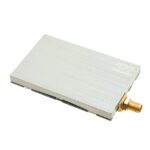 FTS250-010.0M
The activity of extra discounts on wholesale prices is in full swing…
Please fill in your contact information and we will send you the latest wholesale price list.






