 ChipApex | Global Electronic Components Supplier

SEARCH
Search Product
Search Post
— IC芯片 | 连接器 | 传感器 | 被动器件 —
Search productSearch post
— IC芯片 | 连接器 | 传感器 | 被动器件 —
Consult the customer manager about the wholesale price.
consultation hotline:86-132-6715-2157
email:[email protected]
Contact the product manager for consultation. One-stop consultation is available.
Do you want a lower wholesale price? Please send us your inquiry and we will reply immediately.
The GBLA005-E3/45 is a glass passivated single-phase bridge rectifier manufactured by Vishay General Semiconductor - Diodes Division. It features an in-line circuit configuration within a GBL case type, designed for through-hole mounting on printed circuit boards. The device supports a maximum repetitive peak reverse voltage of 50 V and delivers a maximum average forward rectified output current of 4.0 A at a case temperature of 50 °C. Key electrical parameters include a peak forward surge current of 120 A, a maximum instantaneous forward voltage drop of 1.0 V at 4.0 A, and a maximum DC reverse current of 5.0 µA at rated blocking voltage. The component operates within a junction and storage temperature range of -55 to +150 °C.
Verify component authenticity upon receipt by inspecting markings and physical integrity. Confirm that the ordering suffix matches the required package quantity and delivery mode specifications. Ensure all handling procedures comply with standard electrostatic discharge precautions to maintain device reliability during installation.
Select this component when a 50 V reverse voltage rating and 4 A continuous current capacity are required for general-purpose rectification. Evaluate thermal management requirements based on the specified thermal resistance values and derating curves to ensure the junction temperature remains within the maximum operating limit under expected load conditions.
This part belongs to the GBLAxx series of glass passivated single-phase bridge rectifiers from Vishay. The series offers various voltage ratings ranging from 50 V to 1000 V while maintaining a consistent 4 A current rating and GBL package footprint. This specific model represents the lowest voltage option in the lineup.
The official alternative devices listed by the manufacturer are GBL005E, GBL01E, GBL02E, GBL04E, GBL06E, GBL08E, and GBL10.
The maximum non-repetitive peak forward surge current (IFSM) is 120 A for a single sine-wave superimposed on rated load.
The current must be derated as the ambient temperature increases; the device provides 4.0 A at a case temperature of 50 °C and 3.0 A when mounted on a PCB at an ambient temperature of 40 °C.
The typical junction capacitance varies with reverse voltage but is generally in the range of tens of picofarads at 1.0 MHz and 25 °C.
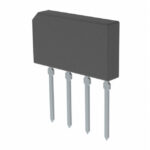 GBLA005-E3/45

The activity of extra discounts on wholesale prices is in full swing…
Please fill in your contact information and we will send you the latest wholesale price list.






