ChipApex | Global Electronic Components Supplier

SEARCH
Search Product
Search Post
— IC芯片 | 连接器 | 传感器 | 被动器件 —
Search productSearch post
— IC芯片 | 连接器 | 传感器 | 被动器件 —
Consult the customer manager about the wholesale price.
consultation hotline:86-132-6715-2157
email:[email protected]
Contact the product manager for consultation. One-stop consultation is available.
Do you want a lower wholesale price? Please send us your inquiry and we will reply immediately.
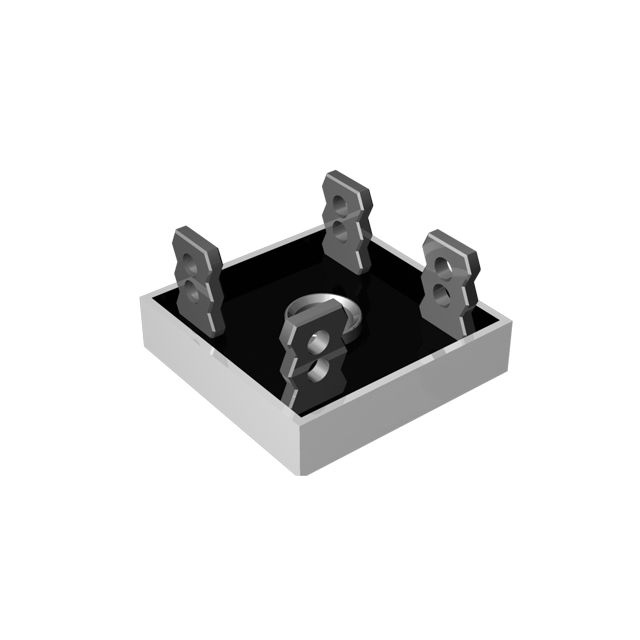
The SURGE GBPC1004 is a single-phase bridge rectifier diode designed for general-purpose power conversion applications. It features a glass-passivated junction to ensure high reliability and stability under varying thermal conditions. The device utilizes a molded plastic case with UL flammability classification 94V-0, providing robust mechanical protection and safety compliance. It supports PCB mounting through universal four-way terminals, facilitating versatile integration into electronic circuits requiring efficient AC-to-DC rectification.
Verify the manufacturer designation as SURGE against the specific datasheet provided by the supplier, as this component family is widely produced by multiple manufacturers including Luguang and Taiwan Semiconductor. Confirm that the suffix indicates the correct voltage rating of 400V. Ensure the package type matches the required PCB footprint and terminal configuration for your assembly process.
Select this component when a standard single-phase bridge rectifier with 10A current capability and 400V reverse voltage is required. Consider the glass-passivated junction for improved longevity compared to non-passivated alternatives. Evaluate the thermal resistance characteristics if the application involves high ambient temperatures or limited heatsinking, as the integrally molded design aids in heat dissipation.
The GBPC series represents a line of high-current single-phase bridge rectifiers commonly used in industrial and consumer electronics. These devices are characterized by their ability to handle surge overload ratings significantly higher than their average forward current. The GBPC1004 specifically denotes the 400V variant within this series, offering a balance of current handling and voltage blocking suitable for mains-powered equipment.
Compatible substitutes include the GBJ1004 from SECOS, which shares similar electrical ratings and form factor. Other equivalents such as the KBPC1004 or MBPC1004 may be considered if pin compatibility and thermal requirements align. Always verify the reverse voltage and forward current specifications match the original design constraints before substitution.
 GBPC1004

The activity of extra discounts on wholesale prices is in full swing…
Please fill in your contact information and we will send you the latest wholesale price list.