ChipApex | Global Electronic Components Supplier

SEARCH
Search Product
Search Post
— IC芯片 | 连接器 | 传感器 | 被动器件 —
Search productSearch post
— IC芯片 | 连接器 | 传感器 | 被动器件 —
Consult the customer manager about the wholesale price.
consultation hotline:86-132-6715-2157
email:[email protected]
Contact the product manager for consultation. One-stop consultation is available.
Do you want a lower wholesale price? Please send us your inquiry and we will reply immediately.
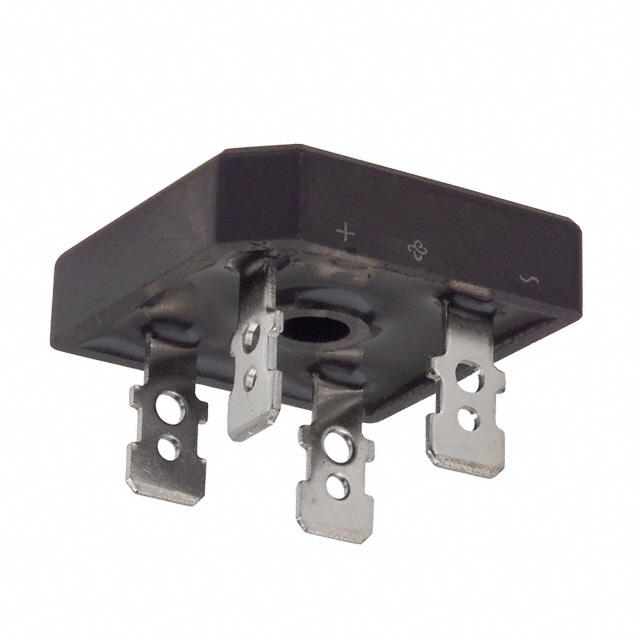
The GBPC1201/1 is a single-phase bridge rectifier manufactured by Vishay General Semiconductor - Diodes Division. It features an average forward rectified current of 12 A and a maximum repetitive peak reverse voltage of 100 V. The device utilizes glass passivation for junction protection and is housed in the GBPC package, which provides an integrally molded heat sink for efficient thermal dissipation. Key electrical characteristics include a maximum non-repetitive peak surge current of 300 A at 60 Hz and a maximum DC reverse leakage current of 5 µA at rated voltage. The component supports a maximum operating junction temperature of 150 °C and complies with RoHS standards.
Verify the specific suffix designation (e.g., E4/51) against the manufacturer's official datasheet to confirm terminal finish and compliance status. Ensure the ordering part number matches the required voltage and current ratings for the target application. Cross-reference the package dimensions with PCB layout requirements prior to procurement to ensure mechanical compatibility.
Select this component for applications requiring a robust 12 A single-phase bridge rectifier with high surge tolerance. The integrated heat sink makes it suitable for space-constrained designs where thermal performance is critical. Verify that the 100 V reverse voltage rating exceeds the peak inverse voltage present in the circuit under all operating conditions.
This component belongs to the GBPC series of single-phase bridge rectifiers from Vishay. The series is characterized by its plastic encapsulation and leaded package options, designed for general-purpose rectification. The GBPC1201 variant specifically targets low-voltage, medium-current applications within the broader family of glass-passivated bridge rectifiers.
Compatible substitutes include the ON Semiconductor GBPC1201 and Panjit GBPC1201. These alternatives share identical electrical ratings and pin configurations. Verify that any replacement maintains the same package type and thermal resistance characteristics to ensure seamless integration.
 GBPC1201/1

The activity of extra discounts on wholesale prices is in full swing…
Please fill in your contact information and we will send you the latest wholesale price list.