ChipApex | Global Electronic Components Supplier

SEARCH
Search Product
Search Post
— IC芯片 | 连接器 | 传感器 | 被动器件 —
Search productSearch post
— IC芯片 | 连接器 | 传感器 | 被动器件 —
Consult the customer manager about the wholesale price.
consultation hotline:86-132-6715-2157
email:[email protected]
Contact the product manager for consultation. One-stop consultation is available.
Do you want a lower wholesale price? Please send us your inquiry and we will reply immediately.
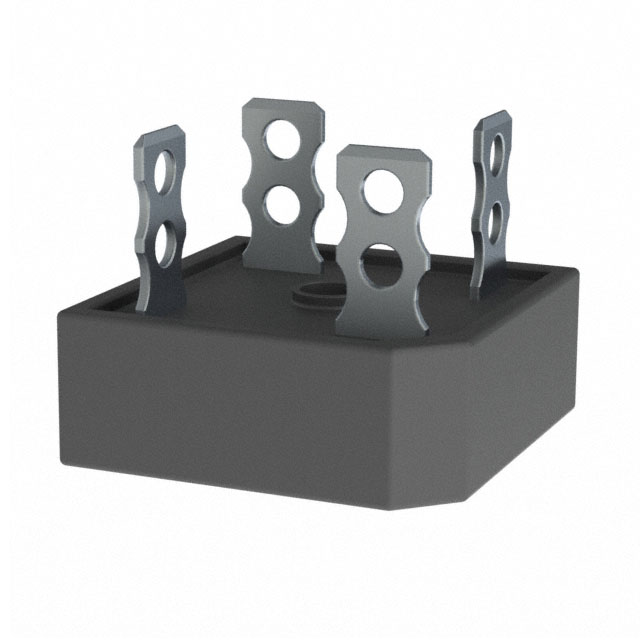
The GBPC1510M is a single-phase silicon bridge rectifier manufactured by Taiwan Semiconductor Corporation. It features an average rectified output current of 15 A and a maximum repetitive peak reverse voltage of 1 kV. The device utilizes glass passivated junctions for enhanced stability and reliability under various operating conditions. Electrical characteristics include a forward voltage drop of 1.1 V at 7.5 A and a reverse leakage current of 5 µA at 1000 V. The component operates within a junction temperature range of -55°C to 150°C and is housed in the GBPC-M package, which integrates a heatsink for efficient thermal dissipation.
Verify the manufacturer part number against official Taiwan Semiconductor documentation to ensure authenticity. Confirm that the specific suffix matches the required terminal configuration. Check RoHS compliance status if environmental regulations apply to the final assembly. Ensure storage conditions adhere to moisture sensitivity level requirements before soldering.
Select this component when a 15 A continuous current rating and 1 kV blocking voltage are required in a flange-mountable package. The GBPC-M case style offers parallel cathode terminals suitable for specific board layouts. Consider the thermal resistance of the integrated heatsink when designing the system's cooling strategy.
This part belongs to the GBPC25 series family, which includes variants with different current ratings such as 25 A and 35 A. The GBPC1510M specifically denotes the 15 A current class within this standardized bridge rectifier lineup. It shares mechanical dimensions and mounting characteristics with other members of the GBPC series for interchangeability in housing design.
Cross-reference with GBPC1510 from other manufacturers like Vishay or Comchip Technology. Verify that substitute parts match the 15 A current, 1 kV voltage, and GBPC-M package type. Ensure electrical parameters such as forward voltage and leakage current remain within acceptable limits for the application.
 GBPC1510M

The activity of extra discounts on wholesale prices is in full swing…
Please fill in your contact information and we will send you the latest wholesale price list.