ChipApex | Global Electronic Components Supplier

SEARCH
Search Product
Search Post
— IC芯片 | 连接器 | 传感器 | 被动器件 —
Search productSearch post
— IC芯片 | 连接器 | 传感器 | 被动器件 —
Consult the customer manager about the wholesale price.
consultation hotline:86-132-6715-2157
email:[email protected]
Contact the product manager for consultation. One-stop consultation is available.
Do you want a lower wholesale price? Please send us your inquiry and we will reply immediately.
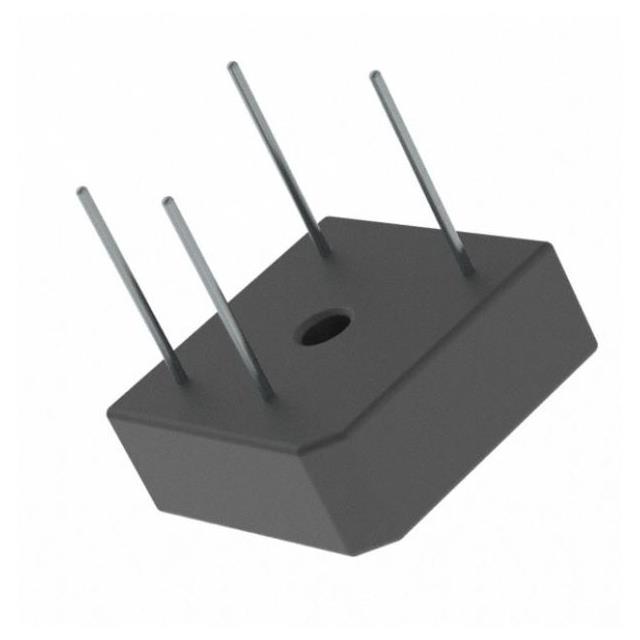
The GBPC25005W-G is a single-phase bridge rectifier manufactured by Comchip Technology, designed for general-purpose power conversion applications. It features an average forward current rating of 25 A and a maximum repetitive peak reverse voltage of 50 V. The device utilizes a standard GBPC-4 package with screw mount installation style, ensuring secure mechanical attachment to heat sinks or printed circuit boards. Key electrical characteristics include a maximum non-repetitive surge current of 350 A and a low forward voltage drop of 1.1 V at 7.5 A. Operating temperatures range from -55°C to +150°C junction temperature, providing robust performance in demanding thermal environments.
Verify the specific suffix 'W' against the manufacturer's official datasheet to confirm if it denotes a specific packaging variant or compliance update distinct from the standard GBPC25005. Ensure that the screw mount terminal configuration matches the intended PCB or chassis mounting design before finalizing procurement orders.
Select this component when a 25 A continuous current rating and 50 V blocking voltage are required in a screw-mountable bridge rectifier format. Compare the 1.1 V forward voltage drop against system efficiency requirements. Verify that the physical dimensions of the GBPC-4 package fit within the available enclosure space and that the thermal resistance allows for adequate heat dissipation without excessive cooling infrastructure.
This part belongs to the GBPC series of single-phase bridge rectifiers from Comchip Technology. The series typically offers high current ratings in standardized packages. The GBPC25005W-G specifically targets applications requiring robust mechanical mounting solutions compared to through-hole alternatives, differentiating it from surface-mount or leaded variants within the broader diode portfolio.
Direct replacements must match the 25 A current, 50 V voltage, and GBPC-4 screw-mount package. Cross-reference with Navitas Semiconductor GBPC25005T/W for pin-compatible alternatives, verifying that forward voltage and surge current specifications meet or exceed the original design requirements.
 GBPC25005W-G

The activity of extra discounts on wholesale prices is in full swing…
Please fill in your contact information and we will send you the latest wholesale price list.