ChipApex | Global Electronic Components Supplier

SEARCH
Search Product
Search Post
— IC芯片 | 连接器 | 传感器 | 被动器件 —
Search productSearch post
— IC芯片 | 连接器 | 传感器 | 被动器件 —
Consult the customer manager about the wholesale price.
consultation hotline:86-132-6715-2157
email:[email protected]
Contact the product manager for consultation. One-stop consultation is available.
Do you want a lower wholesale price? Please send us your inquiry and we will reply immediately.
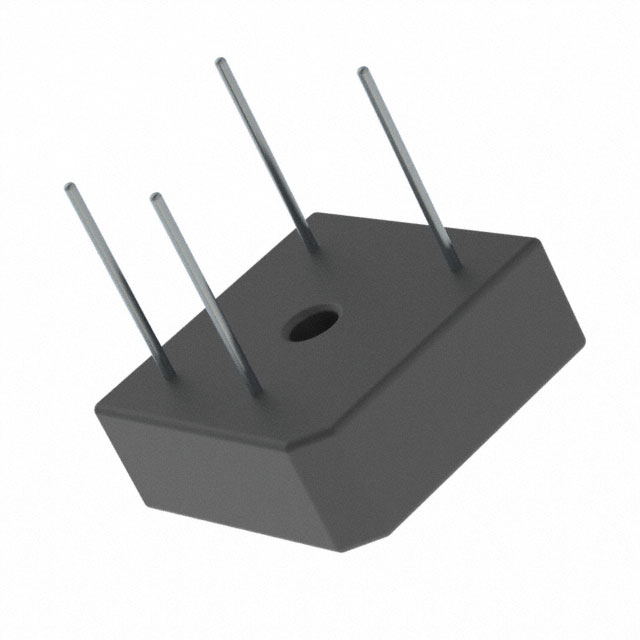
The GeneSiC Semiconductor GBPC5002W is a single-phase glass passivated silicon bridge rectifier designed for high-current applications. It features an average forward rectified current (IO) of 50.0 A at a case temperature of 50 °C and supports a repetitive peak reverse voltage (VRRM) of 200 V. The device withstands a peak forward surge current (IFSM) of 400 A under single sine-wave conditions. Electrical characteristics include a maximum instantaneous forward voltage drop of 1.2 V per leg and a typical junction capacitance of 360 pF. The component operates within a junction temperature range of -55 °C to 150 °C and provides 2500 V RMS isolation from the case to the leads.
Verify the specific manufacturer designation as GeneSiC Semiconductor against the datasheet source provided. Confirm that the W suffix corresponds to the GBPC-W package variant detailed in the specifications. Ensure the procurement documentation matches the electrical ratings for the 200 V reverse voltage configuration.
Select this component when a 50 A continuous current rating and 200 V blocking voltage are required. The GBPC-W package offers universal terminal options suitable for various mounting styles. Consider the 1.2 °C/W thermal resistance for heatsink design calculations. Verify compatibility with the 2500 V isolation requirement between the case and leads.
The GBPC5002W belongs to the GBPC-T/W series of single-phase bridge rectifiers manufactured by GeneSiC Semiconductor. This series includes variants with different voltage ratings ranging from 50 V to 400 V, all sharing the same 50 A current capacity and mechanical footprint. The W package variant utilizes specific terminal configurations distinct from the T package version.
Cross-reference with other manufacturers' GBPC5002 equivalents such as those from Taiwan Semiconductor or Comchip Technology. Ensure replacement parts match the 50 A IO, 200 V VRRM, and GBPC-W package dimensions. Verify terminal types and thermal resistance values align with the original design requirements.
 GBPC5002W

The activity of extra discounts on wholesale prices is in full swing…
Please fill in your contact information and we will send you the latest wholesale price list.