ChipApex | Global Electronic Components Supplier

SEARCH
Search Product
Search Post
— IC芯片 | 连接器 | 传感器 | 被动器件 —
Search productSearch post
— IC芯片 | 连接器 | 传感器 | 被动器件 —
Consult the customer manager about the wholesale price.
consultation hotline:86-132-6715-2157
email:[email protected]
Contact the product manager for consultation. One-stop consultation is available.
Do you want a lower wholesale price? Please send us your inquiry and we will reply immediately.
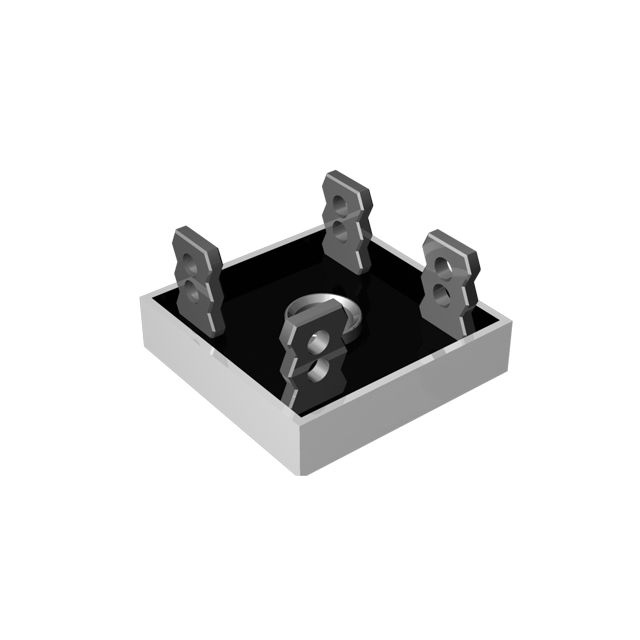
The SURGE GBPC5006 is a single-phase bridge rectifier designed for high-current applications. It features a maximum average forward rectified current of 50 A and a peak repetitive reverse voltage rating of 600 V. The device utilizes a GBPC package with screw mount terminals, ensuring secure mechanical attachment to heat sinks. Key electrical parameters include a maximum non-repetitive peak forward surge current of 450 A at 60 Hz and a typical forward voltage drop of 1.1 V. The component operates within a temperature range of -55°C to +150°C junction temperature.
Verify the manufacturer designation on the component body, as SURGE may be a distributor brand or private label for generic GBPC5006 devices from various foundries. Confirm that the pinout matches standard GBPC configurations (AC inputs on one side, DC output on the other). Request datasheets specific to the lot code to ensure compliance with RoHS and REACH regulations if required by your assembly process.
Select this component when a 50 A continuous current rating and 600 V blocking voltage are required in a compact screw-mount package. Ensure the PCB layout accommodates the GBPC footprint and provides adequate clearance for the mounting screws. Consider thermal resistance values provided in the specific manufacturer's datasheet to design appropriate heatsinking solutions for the intended operating environment.
The GBPC5006 belongs to the widely used GBPC series of bridge rectifiers, characterized by their plastic encapsulation and metal heat sink base. This series is standardized across multiple manufacturers, offering interchangeability based on electrical ratings. The '50' denotes the 50 A current rating, while '06' indicates the 600 V voltage class. These components are fundamental building blocks in AC-DC conversion circuits.
Direct replacements include GBPC5006 from Taiwan Semiconductor, Micro Commercial Components (MCC), Vishay, and HY Electronic Corp. Verify that substitute parts maintain the same GBPC-4 package dimensions and terminal spacing to fit existing footprints. Check for any differences in forward voltage characteristics or thermal resistance if operating near limits.
 GBPC5006

The activity of extra discounts on wholesale prices is in full swing…
Please fill in your contact information and we will send you the latest wholesale price list.