ChipApex | Global Electronic Components Supplier

SEARCH
Search Product
Search Post
— IC芯片 | 连接器 | 传感器 | 被动器件 —
Search productSearch post
— IC芯片 | 连接器 | 传感器 | 被动器件 —
Consult the customer manager about the wholesale price.
consultation hotline:86-132-6715-2157
email:[email protected]
Contact the product manager for consultation. One-stop consultation is available.
Do you want a lower wholesale price? Please send us your inquiry and we will reply immediately.
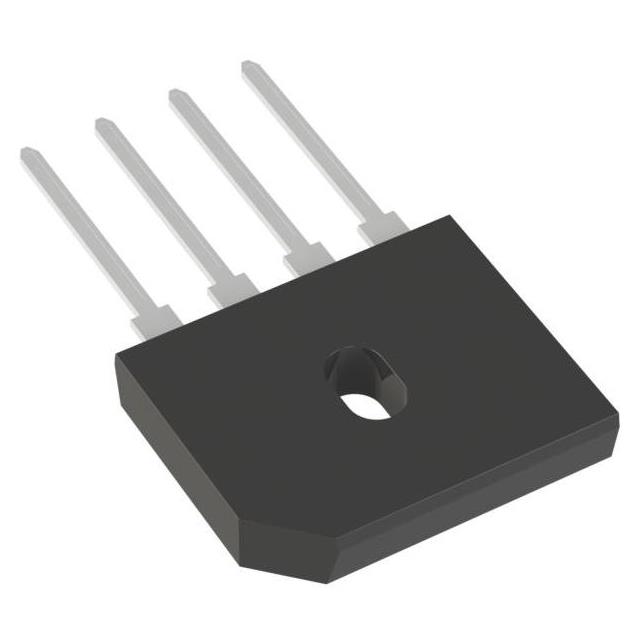
The GBU604-G is a single-phase bridge rectifier manufactured by Comchip Technology, designed for general-purpose power supply applications. It features a robust glass passivated junction construction and utilizes epoxy that meets UL 94 V-0 flammability ratings. The device is housed in the GBU package, providing efficient thermal dissipation capabilities suitable for high-current operations. Key electrical specifications include a maximum average forward rectified current of 6.0 A at an ambient temperature of 75°C and a repetitive peak reverse voltage rating of 400 V. The component supports a non-repetitive peak forward surge current of up to 200 A under specified conditions.
Verify the specific manufacturer part number against official Comchip Technology documentation to confirm exact electrical tolerances and package dimensions. Ensure compliance with RoHS directives if required by your application standards. Cross-reference datasheet parameters such as thermal resistance and reverse leakage current with your system design requirements before finalizing procurement decisions.
Select this component when a 6.0 A continuous current rating and 400 V reverse voltage are required in a compact GBU package. Consider the thermal management needs of the GBU housing for high-efficiency designs. Evaluate the surge current capacity against potential inrush currents in the target circuit to ensure adequate safety margins during startup or fault conditions.
This component belongs to the GBU series of bridge rectifiers from Comchip Technology, which are widely used in industrial and consumer electronics. The GBU series is characterized by its high current density and low forward voltage drop, making it suitable for space-constrained designs requiring significant power handling capabilities.
Consult official substitution guides for compatible alternatives. Verify pinout compatibility and thermal characteristics when considering cross-brand replacements to ensure seamless integration into existing PCB layouts without redesigning the cooling infrastructure.
 GBU604-G

The activity of extra discounts on wholesale prices is in full swing…
Please fill in your contact information and we will send you the latest wholesale price list.