 ChipApex | Global Electronic Components Supplier

SEARCH
Search Product
Search Post
— IC芯片 | 连接器 | 传感器 | 被动器件 —
Search productSearch post
— IC芯片 | 连接器 | 传感器 | 被动器件 —
Consult the customer manager about the wholesale price.
consultation hotline:86-132-6715-2157
email:[email protected]
Contact the product manager for consultation. One-stop consultation is available.
Do you want a lower wholesale price? Please send us your inquiry and we will reply immediately.
The GBU6GL-6130M3/51 is a single-phase bridge rectifier from Vishay General Semiconductor, utilizing FRED Pt® technology for fast recovery performance. It features a maximum repetitive peak reverse voltage of 400V and an average forward rectified current of 3.8A. The device is housed in a GBU package with lead-free and RoHS compliance. Key electrical characteristics include a maximum non-repetitive surge current capability and a low forward voltage drop typical of its series. Operating junction temperature ranges up to 175°C, ensuring reliability in high-temperature environments.
Verify the specific suffix '6130' against official Vishay documentation to confirm exact pinout and mechanical dimensions, as distributor listings may vary. Ensure the component matches the required 400V rating and 3.8A current capacity for your design. Cross-reference the datasheet revision date to ensure compatibility with current manufacturing standards and environmental regulations.
Select this component when fast recovery characteristics are required in a bridge rectifier configuration. The 400V rating suits medium-voltage AC inputs. Consider the GBU package size for PCB space constraints. Compare forward voltage drop specifications against alternative brands to optimize efficiency. Verify thermal management requirements based on the 175°C junction temperature limit.
This part belongs to Vishay's GBU series of single-phase bridge rectifiers. It is part of the broader FRED Pt product line, which emphasizes reduced reverse recovery charge. The M3 suffix indicates lead-free termination finish. The 6130 code typically denotes the specific voltage and current variant within the GBU family, distinguishing it from other ratings like 600V or higher current options.
Potential substitutes include GBU6J-1E3/51 for 600V applications or GBU6K-1E3/51 for higher voltage needs. For lower voltage requirements, GBU6G-M3/51 variants may be considered if current ratings align. Always verify pin compatibility and thermal characteristics before substitution.
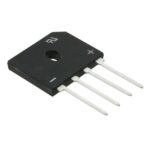 GBU6GL-6130M3/51

The activity of extra discounts on wholesale prices is in full swing…
Please fill in your contact information and we will send you the latest wholesale price list.





