 ChipApex | Global Electronic Components Supplier

SEARCH
Search Product
Search Post
— IC芯片 | 连接器 | 传感器 | 被动器件 —
Search productSearch post
— IC芯片 | 连接器 | 传感器 | 被动器件 —
Consult the customer manager about the wholesale price.
consultation hotline:86-132-6715-2157
email:[email protected]
Contact the product manager for consultation. One-stop consultation is available.
Do you want a lower wholesale price? Please send us your inquiry and we will reply immediately.
The GBU6M-M3/51 is a single-phase bridge rectifier manufactured by Vishay Semiconductors, utilizing glass passivated junction technology for enhanced reliability. It features a GBU surface-mount package with solder pad termination, designed for automated assembly processes. The device supports a maximum average forward rectified current of 6.0 A and offers a peak repetitive reverse voltage rating of 1000 V. Key electrical parameters include a maximum forward voltage drop of 1.0 V at rated current, a non-repetitive peak surge current capacity of 175 A, and a low reverse leakage current of 5 µA. The component operates within a temperature range of -55 °C to +150 °C junction temperature.
Verify the specific ordering suffix against the manufacturer's latest datasheet to confirm pinout orientation and compliance status. Ensure that the M3 designation aligns with required halogen-free specifications for your manufacturing process. Cross-reference the GBU package dimensions with your PCB footprint library to guarantee accurate placement during assembly.
Select this component when a 1000 V reverse voltage rating is necessary for high-line applications. The 6 A current capacity suits moderate-power designs where surface-mount convenience is prioritized over through-hole robustness. Consider the 1.0 V forward voltage drop for efficiency calculations in low-voltage output stages.
This part belongs to Vishay's SUPERECTIFIER family, which integrates standard recovery characteristics into surface-mount packages. The GBU series specifically targets applications replacing traditional through-hole bridges while maintaining similar electrical performance metrics. The M3 suffix indicates lead-free composition compliant with EU RoHS directives.
Direct substitutes include the GBU6M-E3/51 variant, which shares identical electrical characteristics but may differ in specific environmental certification documentation. Verify pin compatibility before swapping between E3 and M3 suffixes as packaging consistency remains critical for existing footprints.
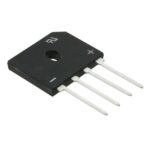 GBU6M-M3/51

The activity of extra discounts on wholesale prices is in full swing…
Please fill in your contact information and we will send you the latest wholesale price list.





