 ChipApex | Global Electronic Components Supplier

SEARCH
Search Product
Search Post
— IC芯片 | 连接器 | 传感器 | 被动器件 —
Search productSearch post
— IC芯片 | 连接器 | 传感器 | 被动器件 —
Consult the customer manager about the wholesale price.
consultation hotline:86-132-6715-2157
email:[email protected]
Contact the product manager for consultation. One-stop consultation is available.
Do you want a lower wholesale price? Please send us your inquiry and we will reply immediately.
The Good-Ark Semiconductor GSGBJ1510 is a single-phase standard bridge rectifier designed for high-current applications. It features a maximum average forward rectified current of 15 A and a peak repetitive reverse voltage of 1000 V. The device utilizes glass passivated chip junctions within a GBJ molded plastic package, ensuring compliance with UL flammability standards (94V-0). Electrical characteristics include a maximum instantaneous forward voltage of 1.0 V at 7.5 A DC and a maximum DC reverse current of 100 µA at rated blocking voltage when the junction temperature is 125°C. The component supports a wide operating junction and storage temperature range from -55°C to +150°C.
Verify the specific part number suffix against official manufacturer documentation to confirm exact electrical ratings and packaging configurations. Ensure that sourcing channels provide valid traceability and authenticity certificates. Confirm RoHS 2015/863/EU compliance status directly with the supplier prior to procurement to meet regulatory requirements.
Select this component for designs requiring 15 A continuous current handling with 1000 V reverse voltage blocking capability. Consider the GBJ through-hole package dimensions for PCB layout constraints. Evaluate thermal management strategies based on the specified junction-to-case and junction-to-ambient thermal resistance values to maintain operation within the -55°C to +150°C temperature range.
The GSGBJ1510 belongs to the GSGBJ15xx series of bridge rectifiers manufactured by Good-Ark Semiconductor. This series covers reverse voltages ranging from 100 V to 1000 V while maintaining a consistent 15.0 A forward current rating across all variants. The GSGBJ1510 specifically represents the highest voltage variant within this lineup, offering 1000 V blocking capability.
Cross-reference with other manufacturers' GBJ package bridge rectifiers rated for 15 A and 1000 V. Verify pinout compatibility and physical dimensions before substitution. Ensure equivalent or superior thermal and electrical specifications are met.
The maximum instantaneous forward voltage is 1.0 V when measured at a DC current of 7.5 A.
Yes, but the datasheet specifies that for capacitive loads, the current should be derated by 20%.
The peak forward surge current is 220 A for an 8.3 ms single half sine-wave superimposed on the rated load, following JEDEC testing methods.
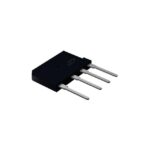 GSGBJ1510

The activity of extra discounts on wholesale prices is in full swing…
Please fill in your contact information and we will send you the latest wholesale price list.





