 ChipApex | Global Electronic Components Supplier

SEARCH
Search Product
Search Post
— IC芯片 | 连接器 | 传感器 | 被动器件 —
Search productSearch post
— IC芯片 | 连接器 | 传感器 | 被动器件 —
Consult the customer manager about the wholesale price.
consultation hotline:86-132-6715-2157
email:[email protected]
Contact the product manager for consultation. One-stop consultation is available.
Do you want a lower wholesale price? Please send us your inquiry and we will reply immediately.
The GSR2W04 is a single-phase fast recovery bridge rectifier manufactured by Good-Ark Semiconductor. It features a maximum average forward current of 2.0 A and a maximum repetitive peak reverse voltage of 400 V. The device utilizes glass passivated die construction with silver-plated copper leads for enhanced reliability. Key electrical characteristics include a maximum forward voltage drop of 1.3 V at 2.0 A, a peak forward surge current rating of 50 A, and a maximum DC reverse current of 500 µA at rated blocking voltage. The component operates within a junction temperature range of -55°C to +125°C and offers a typical thermal resistance of 40 °C/W.
Verify the specific part number GSR2W04 against official Good-Ark Semiconductor documentation to confirm technical specifications. Ensure compliance with RoHS standards as indicated in the manufacturer's ordering information. Cross-reference datasheet parameters such as voltage ratings and thermal resistance with system requirements before integration.
Select the GSR2W04 when a 400 V reverse voltage rating and 2.0 A continuous current capacity are required. Consider the 1.3 V forward voltage drop and 500 µA leakage current for efficiency calculations. Evaluate the 50 A surge current capability against potential transient loads in the application environment.
The GSR2W04 belongs to the GSR2W series of fast recovery bridge rectifiers from Good-Ark Semiconductor. This series covers reverse voltage ratings from 50 V to 1000 V, sharing common physical dimensions and packaging styles. The WOB package variant provides a standardized form factor suitable for various through-hole mounting applications across different voltage classes.
Compatible substitutes include other 400 V, 2 A fast recovery bridge rectifiers in similar packages. Verify that replacement components meet or exceed the original 1.3 V forward voltage drop and 50 A surge current specifications. Ensure thermal resistance and operating temperature ranges align with the existing design constraints.
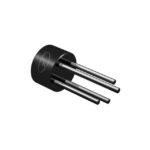 GSR2W04

The activity of extra discounts on wholesale prices is in full swing…
Please fill in your contact information and we will send you the latest wholesale price list.





