ChipApex | Global Electronic Components Supplier
SEARCH
Search Product
Search Post
— IC芯片 | 连接器 | 传感器 | 被动器件 —
Search productSearch post
— IC芯片 | 连接器 | 传感器 | 被动器件 —
Consult the customer manager about the wholesale price.
consultation hotline:86-132-6715-2157
email:[email protected]
Contact the product manager for consultation. One-stop consultation is available.
Do you want a lower wholesale price? Please send us your inquiry and we will reply immediately.
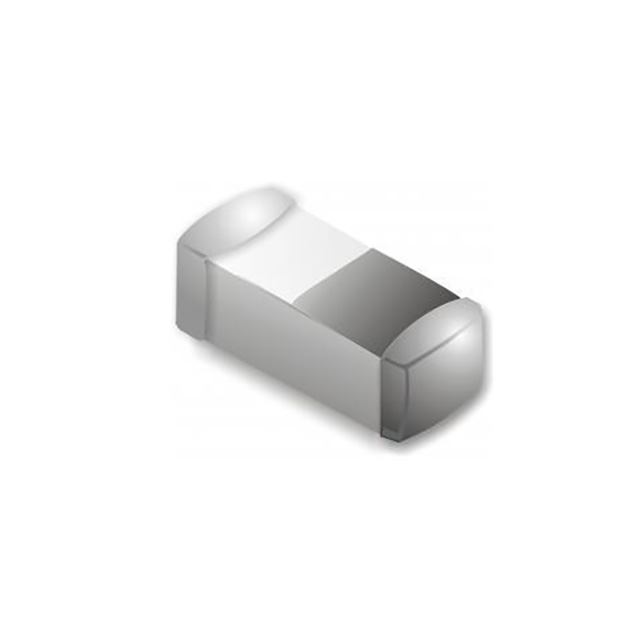
The Max Echo HBLS0603-2N4S_M is a multilayer high-frequency ceramic chip inductor designed for surface-mount applications. It features an unshielded construction with a nominal inductance of 2.4 nH and a tolerance of ±0.3 nH. The component has a maximum DC resistance of 200 mOhms and a saturation current rating of 350 mA. Its self-resonant frequency is specified at 8.3 GHz, measured at a test frequency of 100 MHz. The physical dimensions are 0.6 mm in length, 0.3 mm in width, and 0.3 mm in height. It operates within a temperature range of -55°C to +125°C.
Verify the specific manufacturer designation when sourcing, as the model may be associated with Max Echo Technology Corp or distributed under alternative identifiers such as CLH0603T-2N4S-F. Confirm that the unshielded variant matches the circuit requirements, as shielded alternatives exist within similar form factors. Ensure the supplier provides official datasheets confirming the 2.4 nH tolerance and 350 mA current ratings to guarantee performance consistency in high-frequency designs.
Select this component for applications requiring precise low-nanohenry inductance values in extremely small footprints. The unshielded nature makes it ideal for dense layouts where magnetic coupling must be minimized. Consider the 200 mOhm DCR limit for power efficiency in low-current RF paths. The wide operating temperature range supports deployment in automotive or industrial environments. Evaluate the 8.3 GHz self-resonant frequency to ensure adequate margin above the target operating frequency.
This part belongs to the HBLS series of multilayer high-frequency inductors from Max Echo. The series focuses on providing stable inductance values in miniature packages suitable for modern consumer electronics. The 0603 metric footprint (0201 imperial) allows for high-density board assembly. The product line emphasizes ceramic core technology to maintain electrical stability across varying thermal conditions.
The part number alias CLH0603T-2N4S-F indicates potential cross-reference availability. Verify pin compatibility and exact inductance tolerances before substitution. Ensure the replacement maintains the same unshielded characteristic and physical dimensions to fit existing PCB land patterns.
 HBLS0603-2N4S_M
The activity of extra discounts on wholesale prices is in full swing…
Please fill in your contact information and we will send you the latest wholesale price list.