ChipApex | Global Electronic Components Supplier
SEARCH
Search Product
Search Post
— IC芯片 | 连接器 | 传感器 | 被动器件 —
Search productSearch post
— IC芯片 | 连接器 | 传感器 | 被动器件 —
Consult the customer manager about the wholesale price.
consultation hotline:86-132-6715-2157
email:[email protected]
Contact the product manager for consultation. One-stop consultation is available.
Do you want a lower wholesale price? Please send us your inquiry and we will reply immediately.
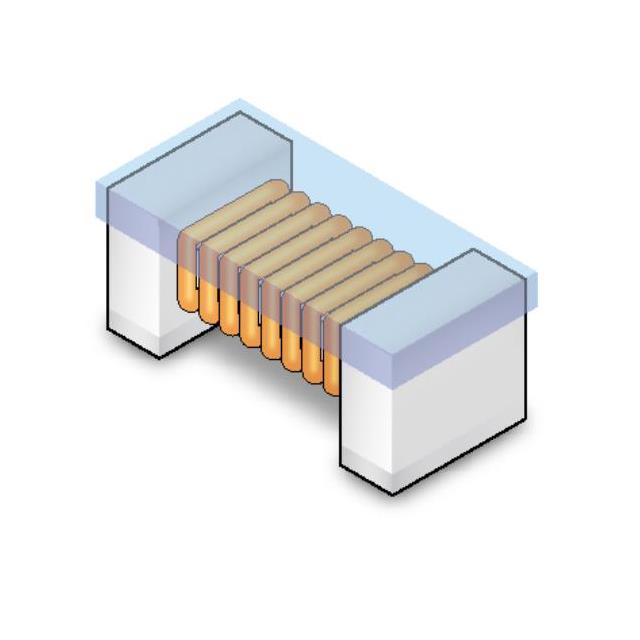
The HBWS2012-R15J is a fixed wirewound inductor manufactured by Max Echo, designed for surface-mount applications. It features an unshielded construction with a ceramic core material, housed in a standard 0805 (2015 Metric) package footprint. The component provides an inductance value of 150 nH, measured at a test frequency of 100 MHz. It supports a maximum current rating of 400 mA and exhibits a maximum DC resistance of 560 mOhm. This specific model is part of the company's fixed inductor lineup intended for RF and power circuit integration.
Verify the exact datasheet specifications directly from the manufacturer or authorized distributor before finalizing procurement decisions. Confirm that the 150 nH inductance and 400 mA current rating align with your specific circuit requirements. Ensure compatibility with the 0805 surface-mount package dimensions during PCB layout planning. Cross-reference the 560 mOhm maximum DC resistance to validate thermal performance under expected load conditions.
Select this component when an unshielded wirewound topology is required for cost-effective RF or power applications. Consider the 150 nH value and 400 mA limit against your circuit's impedance and current demands. The ceramic core offers stability suitable for general-purpose uses. Evaluate the 0805 footprint constraints against available board space. Compare alternative models if lower DC resistance or higher current capacity is necessary for the target application.
Max Echo Technology Corp., established in 1992, specializes in SMD multilayer inductors and beads. The HBWS2012-R15J belongs to their fixed inductor series, leveraging precise wirewound technology. The company focuses on magnetic materials and LTCC manufacturing processes for industrial and automotive sectors. This part represents their capability to provide components for both RF and power applications using standard metric packaging formats.
The HBWS2012-15NJ serves as a related variant within the same series but differs significantly in inductance (15 nH vs. 150 nH) and current rating (600 mA vs. 400 mA). Substitution requires careful evaluation of circuit impedance matching and current handling capabilities. Do not assume interchangeability without verifying specific electrical parameter alignment against the original design requirements.
 HBWS2012-R15J
The activity of extra discounts on wholesale prices is in full swing…
Please fill in your contact information and we will send you the latest wholesale price list.