ChipApex | Global Electronic Components Supplier
SEARCH
Search Product
Search Post
— IC芯片 | 连接器 | 传感器 | 被动器件 —
Search productSearch post
— IC芯片 | 连接器 | 传感器 | 被动器件 —
Consult the customer manager about the wholesale price.
consultation hotline:86-132-6715-2157
email:[email protected]
Contact the product manager for consultation. One-stop consultation is available.
Do you want a lower wholesale price? Please send us your inquiry and we will reply immediately.
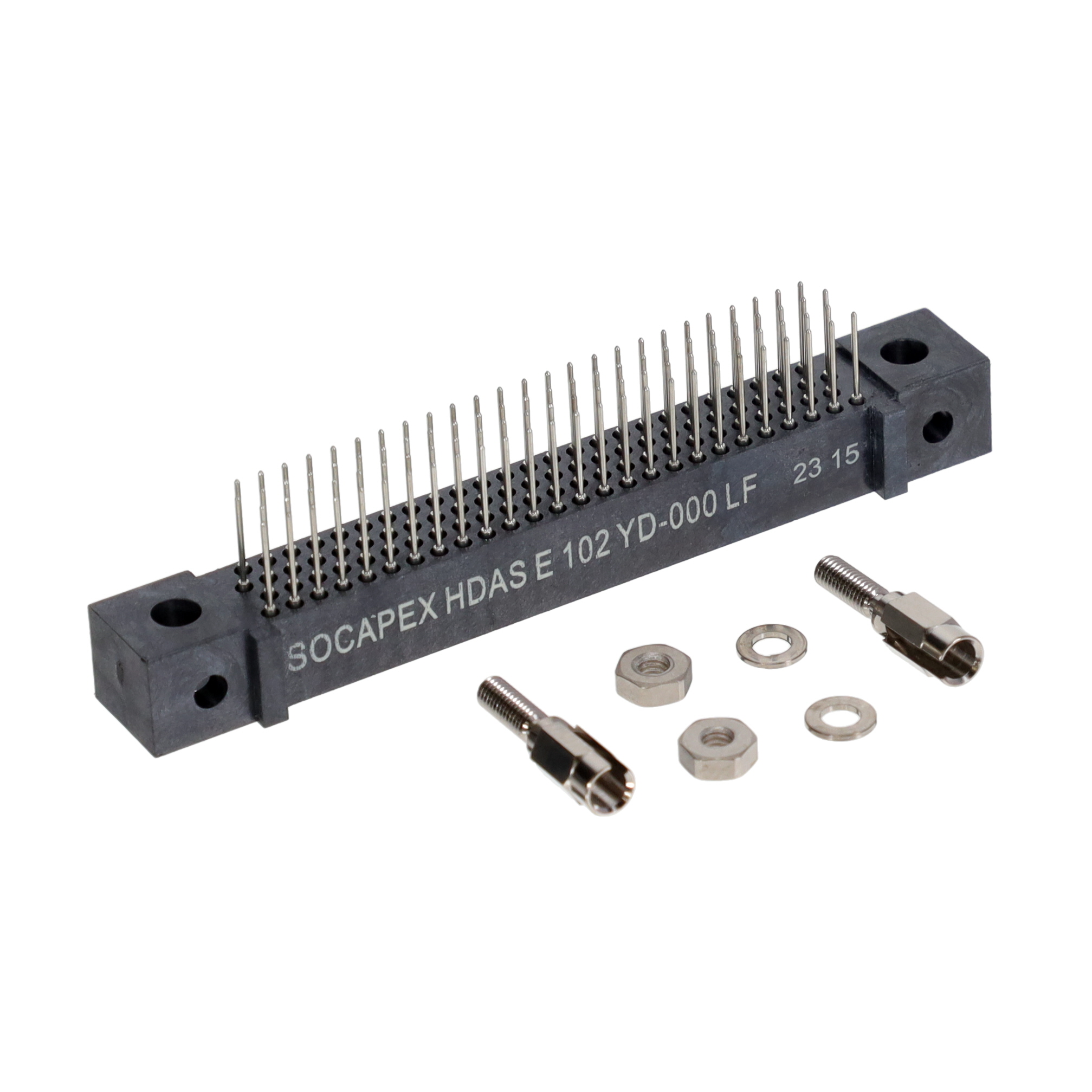
The HDASE102YD-000LF is a rectangular MIL-Spec connector from the Amphenol HDAS series, designed for high-density PCB mounting. It features a straight receptacle configuration with 102 positions arranged in three rows. The contacts are female sockets with gold plating, utilizing a solder termination type for secure board attachment. Rated for 750 V and 4.5 A per contact, it operates within a temperature range of -65°C to +150°C. Constructed with liquid crystal polymer (LCP) insulation and copper alloy contacts, it meets MIL-DTL-55302G standards.
Verify the specific manufacturer part number against official Amphenol Aerospace Operations documentation to ensure compatibility with system requirements. Confirm that the gold-plated socket contacts and LCP housing material meet the environmental and electrical ratings necessary for the intended application. Cross-reference the MIL-DTL-55302G compliance details with project specifications before finalizing procurement decisions.
Select this component when high pin count and small form factor are critical constraints. The three-row layout maximizes connectivity within limited PCB space. Ensure the operating environment stays within the specified temperature limits. Verify that the straight PC tail contact style aligns with the mechanical assembly design. Consider the robust side rail protection if mating with compatible male counterparts in rugged conditions.
This part belongs to the HDAS family of high-performance PCB connectors known for reliability in harsh environments. The series emphasizes dense packing and durability, often outperforming standard MIL-DTL-55302 requirements. It serves as a solution for applications where space is limited but high power and signal integrity are required. The design supports both traditional and modern lead-free manufacturing processes.
Check for direct substitutes within the HDAS series that match the 102-position count and three-row configuration. Ensure any replacement maintains the same straight orientation and solder termination style. Verify that alternative parts offer equivalent voltage and current ratings. Confirm compatibility with existing mounting flanges and jackscrew mechanisms if used in the assembly.
 HDASE102YD-000LF
The activity of extra discounts on wholesale prices is in full swing…
Please fill in your contact information and we will send you the latest wholesale price list.