 ChipApex | Global Electronic Components Supplier

SEARCH
Search Product
Search Post
— IC芯片 | 连接器 | 传感器 | 被动器件 —
Search productSearch post
— IC芯片 | 连接器 | 传感器 | 被动器件 —
Consult the customer manager about the wholesale price.
consultation hotline:86-132-6715-2157
email:[email protected]
Contact the product manager for consultation. One-stop consultation is available.
Do you want a lower wholesale price? Please send us your inquiry and we will reply immediately.
The HEF40175BT,652 is a quad D-type flip-flop integrated circuit manufactured by Nexperia. It belongs to the HEF4000B series of CMOS logic devices. The component features four independent D-type flip-flops within a single package. It operates with a supply voltage range of 3V to 15V. The device supports asynchronous set and reset functions for each flip-flop. It utilizes a positive edge-triggered clock input mechanism. The maximum propagation delay is specified at 60ns when operating at 15V with a 50pF load. The static current consumption is typically 4µA. The unit is housed in a 16-pin SOIC surface-mount package.
Verify the specific ordering code suffix to ensure the correct packaging variant. Confirm that the requested quantity matches the available reel or tube specifications provided by the distributor. Check the lead time requirements against project schedules as availability may vary. Ensure the voltage ratings align with the system design constraints before finalizing the purchase order.
Select this component when a compact solution for multiple synchronous storage elements is required. Consider the wide supply voltage range for compatibility with various logic levels. Evaluate the propagation delay specifications against the maximum clock frequency requirements of the target application. Ensure the package dimensions fit within the designated PCB footprint constraints.
This part is part of the HEF4000B series, which represents standard CMOS logic functionality. It serves as a fundamental building block for sequential logic designs. The device complements other logic families by providing reliable digital storage capabilities. It is designed for general-purpose digital electronics applications requiring stable and predictable switching behavior.
Compatible substitutes include other quad D-type flip-flops from the same logic family such as the HEF40175BP. Verify pinout compatibility and electrical characteristics before substitution. Ensure the replacement package type matches the existing board layout requirements.
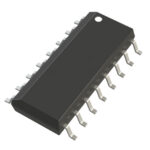 HEF40175BT,652

The activity of extra discounts on wholesale prices is in full swing…
Please fill in your contact information and we will send you the latest wholesale price list.





