ChipApex | Global Electronic Components Supplier
SEARCH
Search Product
Search Post
— IC芯片 | 连接器 | 传感器 | 被动器件 —
Search productSearch post
— IC芯片 | 连接器 | 传感器 | 被动器件 —
Consult the customer manager about the wholesale price.
consultation hotline:86-132-6715-2157
email:[email protected]
Contact the product manager for consultation. One-stop consultation is available.
Do you want a lower wholesale price? Please send us your inquiry and we will reply immediately.
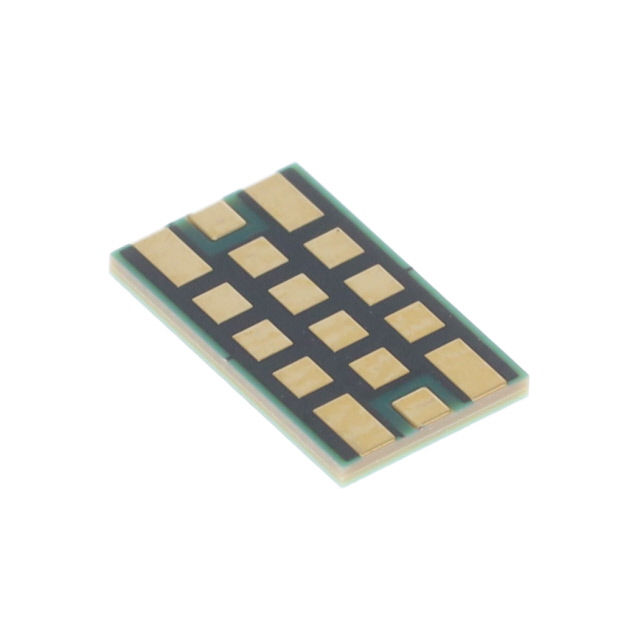
The HF0AA2290A700 is a high-pass RF filter manufactured by KYOCERA AVX, designed for signal conditioning applications. It operates at a center frequency of 2.29 GHz with a specified insertion loss of 1.2 dB. The component utilizes a surface-mount technology (SMD/SMT) installation method and features a 16-ULGA package configuration. Its physical dimensions are 6.58 mm in length, 3.98 mm in width, and a maximum height of 0.56 mm. The device maintains a standard impedance of 50 Ohms and functions within an operating temperature range from -55°C to +85°C.
Verify current availability status directly with authorized distributors or the manufacturer, as lead times may vary significantly due to custom manufacturing requirements. Confirm specific ordering suffixes and packaging configurations to ensure compatibility with existing supply chain protocols. Request updated datasheets and compliance documentation prior to finalizing procurement decisions to guarantee adherence to project specifications.
Select this component when a high-pass filter with a 2.29 GHz cutoff frequency is required in a compact 16-ULGA footprint. Ensure the application environment supports the specified -55°C to +85°C operating temperature range. Verify that the 50 Ohm impedance matches the system design requirements. Consider the 1.2 dB insertion loss specification against overall link budget constraints during the circuit design phase.
This part belongs to the HF series of high-pass filters produced by KYOCERA AVX. These components are engineered using thin-film technology to deliver stable performance at microwave frequencies. The series is characterized by its robust construction and suitability for demanding RF environments where size and electrical precision are critical factors in system architecture.
No public confirmed substitute part numbers are available in the provided documentation. Evaluate alternative components only if they match the 2.29 GHz frequency, 16-ULGA package, and 50 Ohm impedance specifications while maintaining equivalent insertion loss and thermal performance limits.
 HF0AA2290A700
The activity of extra discounts on wholesale prices is in full swing…
Please fill in your contact information and we will send you the latest wholesale price list.