ChipApex | Global Electronic Components Supplier
SEARCH
Search Product
Search Post
— IC芯片 | 连接器 | 传感器 | 被动器件 —
Search productSearch post
— IC芯片 | 连接器 | 传感器 | 被动器件 —
Consult the customer manager about the wholesale price.
consultation hotline:86-132-6715-2157
email:[email protected]
Contact the product manager for consultation. One-stop consultation is available.
Do you want a lower wholesale price? Please send us your inquiry and we will reply immediately.
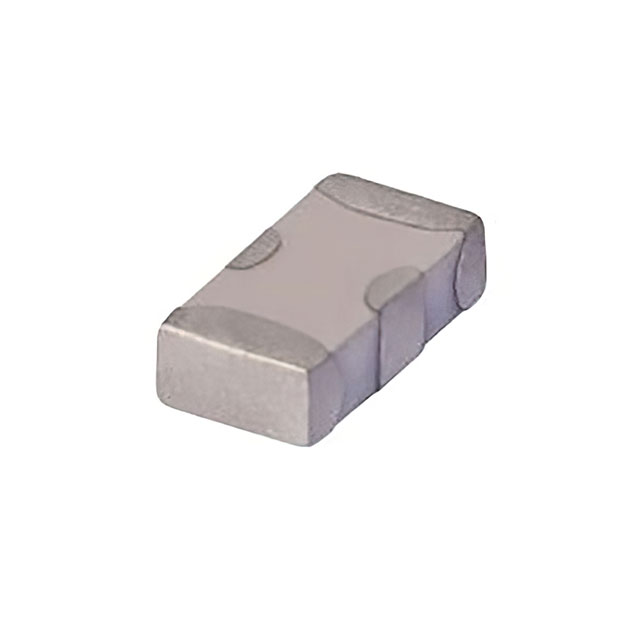
The HFCN-1320D+ is a low-temperature co-fired ceramic (LTCC) high-pass filter manufactured by Mini-Circuits. It operates within a frequency range of 1400 MHz to 5000 MHz, providing signal filtering for RF applications. The component utilizes an FV1206 surface-mount package style and is supplied in tape and reel format. Electrical specifications are measured on the Mini-Circuits characterization test board TB-HFCN-1320D+ at +25°C. The device features a DC resistance to ground of 100 Mohms minimum, ensuring proper isolation characteristics in circuit designs.
Verify the specific ordering suffix and package configuration when sourcing components. Confirm that the supplier provides official datasheets matching the HFCN-1320D+ designation. Ensure compatibility with standard SMD reflow processes. Check for RoHS compliance markings if required by project specifications. Validate supply chain authenticity through authorized Mini-Circuits distributors to guarantee component integrity and performance consistency.
Select this component for applications requiring precise high-pass filtering in compact RF circuits. The LTCC construction offers stability across temperature variations compared to other filter types. Consider the FV1206 footprint constraints during PCB layout planning. Evaluate insertion loss and return loss parameters from the official S-parameter data sheets against system requirements. Ensure the operating frequency range aligns with the 1400 MHz to 5000 MHz specification.
This part belongs to the HFCN series of high-pass filters from Mini-Circuits. These components are designed for microwave and RF applications where size and performance are critical. The series includes various cutoff frequencies and package options. The HFCN-1320D+ specifically targets the lower end of the microwave spectrum, bridging UHF and L-band frequencies.
Consult Mini-Circuits documentation for direct substitutes or alternative models within the HFCN family. Verify electrical parameter equivalence before swapping components. Cross-reference package dimensions and pin configurations to ensure mechanical compatibility. Review thermal management requirements if replacing with different filter technologies.
 HFCN-1320D+
The activity of extra discounts on wholesale prices is in full swing…
Please fill in your contact information and we will send you the latest wholesale price list.