 ChipApex | Global Electronic Components Supplier
SEARCH
Search Product
Search Post
— IC芯片 | 连接器 | 传感器 | 被动器件 —
Search productSearch post
— IC芯片 | 连接器 | 传感器 | 被动器件 —
Consult the customer manager about the wholesale price.
consultation hotline:86-132-6715-2157
email:[email protected]
Contact the product manager for consultation. One-stop consultation is available.
Do you want a lower wholesale price? Please send us your inquiry and we will reply immediately.
The HIP6020ACB-T is a synchronous-rectifier pulse-width modulator (PWM) controller designed for high-performance DC/DC conversion. It integrates a voltage-mode control architecture with an internal N-channel power MOSFET driver, eliminating the need for external Schottky diodes in buck applications. The device supports input voltages up to 15V and features adjustable switching frequencies. Key operational parameters include a fixed minimum on-time of 130ns and a programmable soft-start capability. It operates within a temperature range of -40°C to +85°C and is housed in an 8-pin SOIC package.
Verify the specific suffix 'CB' against the manufacturer's latest datasheet to confirm pinout compatibility and RoHS status. Ensure the operating environment remains within the specified -40°C to +85°C range. Confirm that the PCB layout accommodates the thermal requirements associated with the internal MOSFET integration. Cross-reference the ordering code with official Renesas or Intersil catalogs to avoid obsolete variants.
Select this component when designing synchronous buck converters requiring high efficiency at moderate currents. The internal MOSFET simplifies the bill of materials compared to asynchronous designs using external diodes. Consider the maximum switching frequency limits and the required inductor selection based on the voltage-mode control characteristics. Evaluate the thermal dissipation capabilities of the SOIC package for the target application load.
This part belongs to the HIP60xx series of PWM controllers from Intersil, now part of Renesas. These devices are engineered for desktop and notebook computer applications, specifically targeting CPU core voltage regulation. The family typically includes variants like the HIP6006 and HIP6012, differing primarily in current handling capabilities and feature sets such as dual-phase synchronization.
Official cross-references may include the HIP6006CVZA-T or HIP6012CB-T depending on the specific current and phase requirements. Verify that any substitute maintains the same 8-pin SOIC footprint and compatible control logic levels.
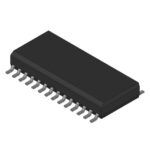 HIP6020ACB-T
The activity of extra discounts on wholesale prices is in full swing…
Please fill in your contact information and we will send you the latest wholesale price list.





